
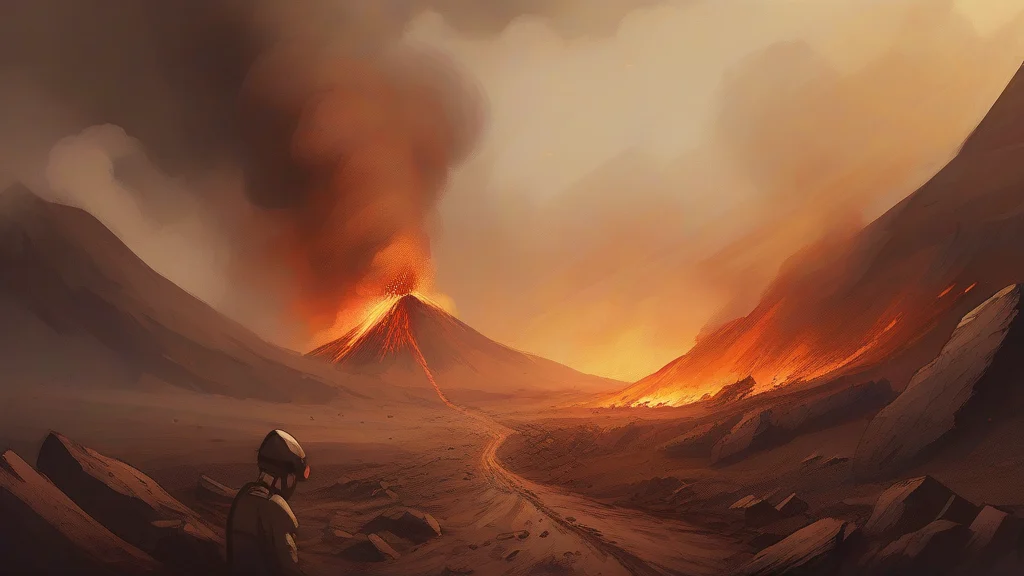
What does pyroclastic mean?
Pyroclastic is a technical adjective describing rock, ash, and other material created when explosive volcanic eruptions violently fragment magma, lava, or pre-existing rock. The resulting fragments may settle around a volcano to form distinctive layers or be swept downhill in fast-moving flows and surges. The word is especially important in geology and volcanology because pyroclastic activity can produce widespread, fast-moving, and highly hazardous volcanic phenomena. In ordinary writing, it is more precise than simply calling something volcanic: it identifies material or processes specifically associated with explosive fragmentation. Common expressions include “pyroclastic flow,” “pyroclastic deposits,” and “pyroclastic material.” The adjective is used internationally in British and American English and is pronounced with secondary stress on the first syllable and primary stress on “clastic.”
adjectiveRelating to or consisting of fragments formed by the explosive activity of a volcano. Pyroclastic material is produced by the rapid fragmentation of lava, rock, or volcanic ash during an eruption.
- Relating to or consisting of fragments produced by explosive volcanic eruptions, especially volcanic ash, pumice, and other fragmented ejecta.
"The volcano's eruption generated a deadly pyroclastic flow down the mountain's western slope."
"Scientists found layers of pyroclastic ash across the valley floor."
"The eruption produced a broad deposit of pyroclastic material around the crater."
A pyroclastic flow can race down a volcano at extreme speed, making it one of the most dangerous volcanic hazards.
Reviewed by Deb Chak, Editor. AI-assisted content curated by RJS Tech Solutions LLP.
Where does pyroclastic come from?
The word was formed in the 19th century from the combining form “pyro-,” derived from Greek pyr, meaning “fire,” and “-clastic,” based on Greek klastos, meaning “broken” or “fragmented.” Its development follows the development of geological terminology for materials produced by explosive volcanic eruptions. The element “pyroclast” also exists as a noun for an individual fragment or fragmental material formed in this way, while related words such as pyromania and pyrotechnics reflect the same Greek root for fire.
How pyroclastic is actually used
The term is primarily used in geology and volcanology. It normally describes the fragmented material or deposits associated with explosive eruptions, rather than lava itself. It is formal and technical, though it is also standard in descriptions of volcanic hazards.
Easily confused with pyroclastic
Pyroclastic describes material formed by explosive volcanic fragmentation, whereas pyrogenic describes heat or processes that generate, rather than fragment, rock or magma.