
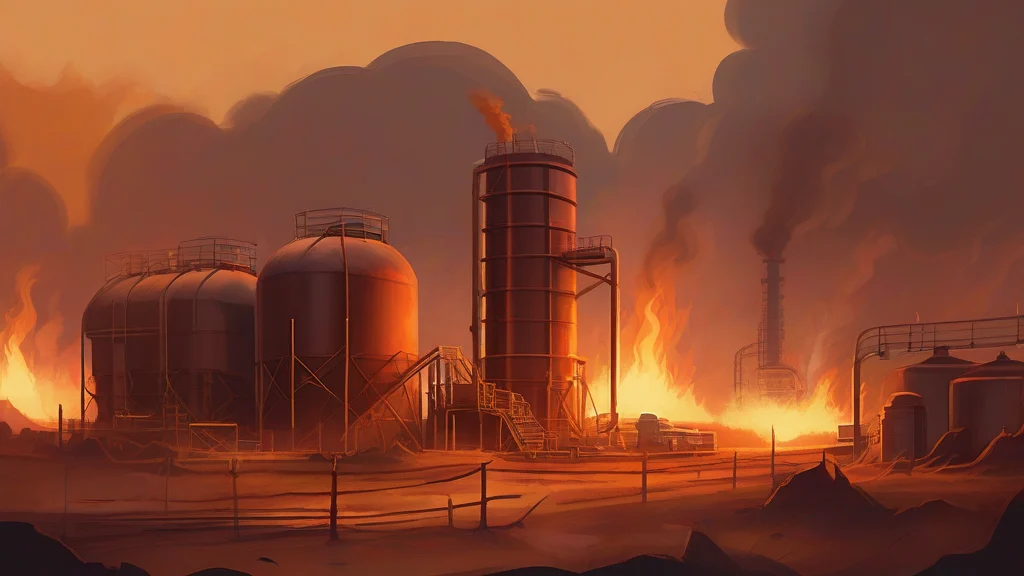
What does pyrolyze mean?
Pyrolyze means to break down a substance by heating it, usually in the absence of oxygen. The resulting process, called pyrolysis, is especially important for organic materials such as plastics, biomass, and waste, which can be converted into fuels, carbon-rich products, or chemical feedstocks. Unlike ordinary combustion, pyrolysis does not chiefly aim to burn the material; instead, heat causes complex molecules to decompose into simpler components. This distinction makes it useful in waste management, renewable energy, carbon processing, and chemical manufacturing. The verb is relatively specialized and is most common in technical, industrial, and environmental contexts. In American usage, the standard spelling is pyrolyze; British usage more often favors pyrolyse. The word combines a form meaning fire with a suffix associated with loosening or dissolution, accurately suggesting the breaking apart of matter by heat.
verbTo decompose a substance by heating it, especially in the absence of oxygen. The process is called pyrolysis.
- To decompose a substance by heating it, especially in an oxygen-free environment.
"The facility uses controlled heat to pyrolyze plastic waste into reusable chemical feedstocks."
"Researchers used a laboratory furnace to pyrolyze samples of contaminated soil."
"Organic waste can be pyrolyzed to produce fuel and chemical products."
With enough heat, pyrolysis can dismantle organic material without oxygen and turn its components into something useful.
Reviewed by Deb Chak, Editor. AI-assisted content curated by RJS Tech Solutions LLP.
Where does pyrolyze come from?
The modern verb combines the combining form pyro-, derived from Greek pyr, meaning fire, with -lyze, which comes from Greek lysis, a loosening or dissolution and ultimately from lyein, to loosen. English also has the variant pyrolyse, especially in British usage, alongside the related nouns pyrolysis and adjectives such as pyrolytic.
Related word forms
How pyrolyze is actually used
The spelling pyrolyze is standard in American English. British English commonly uses pyrolyse, with third-person singular pyrolyses. Pyrolysis normally occurs without oxygen, although related processes can involve limited or no oxygen supply.