
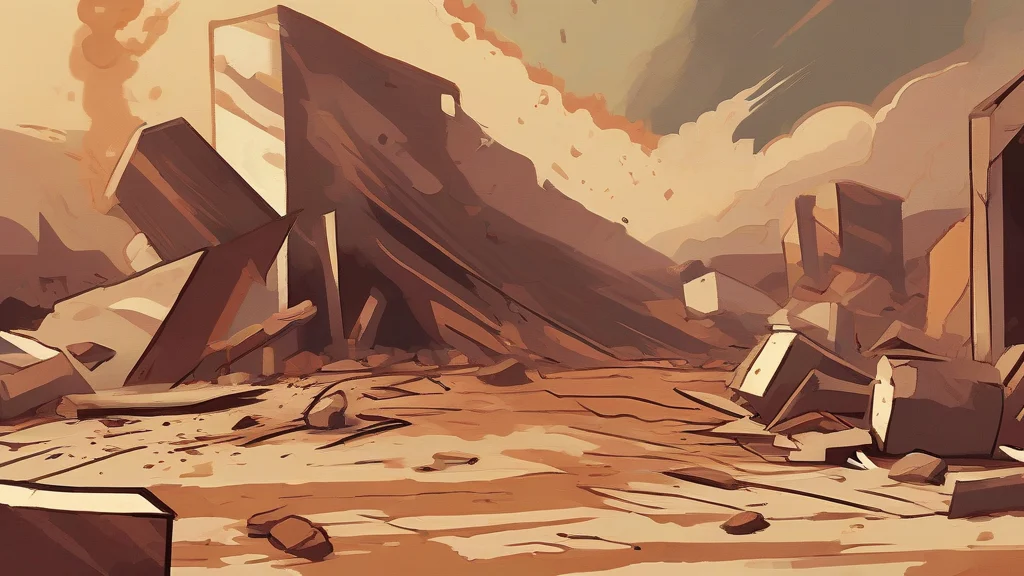
What does quake mean?
A quake is a sudden shaking of the ground, usually one caused by an earthquake. The word can also describe a powerful or disruptive event that produces shock, fear, or upheaval: a political quake, for example, may refer to a major change in government or policy. As a verb, “to quake” means to tremble or shake, especially from fear, shock, or anger, as in “The child quaked at the thought of the test.” The noun is broad enough to refer both to natural seismic events and to figurative shocks, while the verb is generally more literary than the ordinary verbs “shake” and “tremble.” Its compact, forceful sound makes it memorable and useful for expressive writing, journalism, and descriptions of sudden disturbance.
An earthquake or sudden movement of the ground; also, a sudden event that causes widespread shock or disruption.
"The quake damaged several buildings in the old town."
“Earthquake” is the standard term for a seismic event; “quake” is often used in journalism, headlines, and figurative descriptions.
To tremble or shake, especially as a result of fear, shock, or anger.
"The witness quaked as she described the accident."
This use is more literary and dramatic than the common verbs “shake” and “tremble.”
The plural is formed by adding “-s.”
"Several small quakes were recorded near the coast."
A quake can describe both a dramatic geological event and the unmistakable feeling of being deeply shaken by alarming news.
Reviewed by Deb Chak, Editor. AI-assisted content curated by RJS Tech Solutions LLP.
Where does quake come from?
The word comes from Middle English “quaken,” which developed from Old English “cwacan,” meaning “to tremble” or “shake.” Old English “cwacan” belonged to the Germanic language family and was related to forms in several other Germanic languages. The name “Quaker” also reflects this history: it originally referred to people who trembled or quaked during religious meetings.
Related word forms
How quake is actually used
As a noun, “quake” is a concise and sometimes journalistic alternative to “earthquake,” but it can also refer to any sudden alarming event. As a verb, it is literary or emphatic and is often used in phrases such as “quake with fear” or “quake with rage.”
Easily confused with quake
A quake is a shaking or earthquake, whereas a quack is the sound made by a duck or a person pretending to be a duck.