
What does rabble mean?
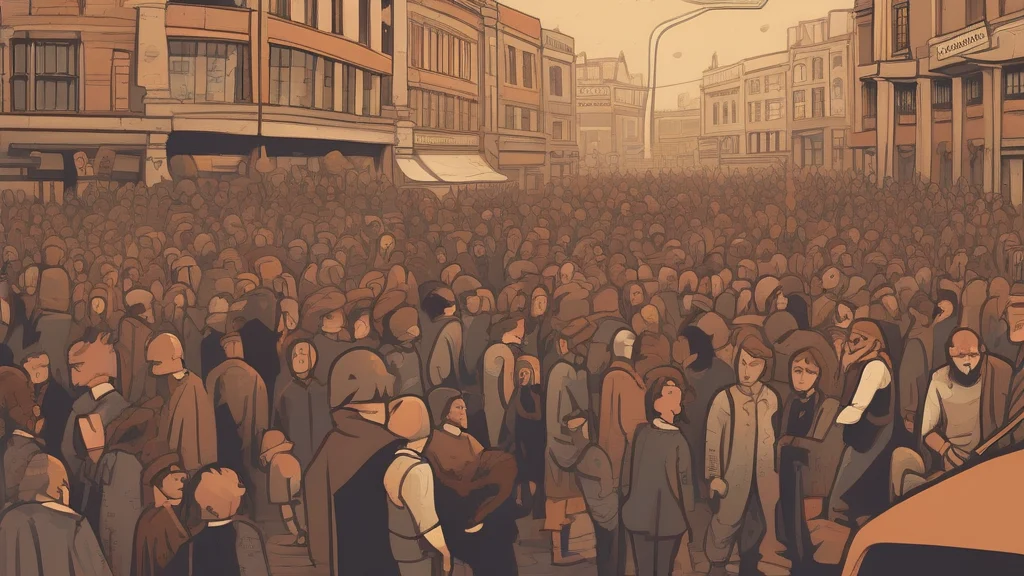
A rabble is a large, disorderly, and usually noisy crowd. The word can describe a physical gathering, as in a mob filling a street, but it is also used metaphorically for a disorganized or politically despised group: a politician might accuse opponents of appealing to “the rabble.” Its strong association with disorder and social contempt means that it is not normally a neutral synonym for “crowd.” In older and literary contexts, it can emphasize the confused movement or noise of a multitude. Although usually treated as a singular collective noun, it has the uncommon plural “rabbles.” The related expression “rabble-rousing” describes rhetoric intended to inflame or mobilize a disorderly crowd, and compounds such as “rabble-rouser” carry the same disruptive, politically charged associations.
A large, disorderly, or noisy crowd, or a contemptuous term for a disorganized and undesirable group of people.
"The rabble scattered when the police arrived."
Often derogatory or contemptuous; normally singular in the collective construction “the rabble.”
To speak or cry loudly and disorderly; now chiefly archaic.
"The crowd continued to rabble outside the hall."
Rare and literary; the noun is the modern dominant use.
The usual collective form is singular: “a rabble” or “the rabble.” The plural “rabbles” is uncommon and appears chiefly in literary or figurative use.
"The novel describes successive rabbles gathering around the speaker."
From “the rabble” to “rabble-rousing”: the word has long described not just a noisy crowd, but a speaker who knows exactly how to stir one up.
Reviewed by Deb Chak, Editor. AI-assisted content curated by RJS Tech Solutions LLP.
Where does rabble come from?
The word comes from Middle English “rabel,” which drew on Old French “rabel,” a term associated with a noisy or disorderly group. The ultimate origin of the Old French word is uncertain, so claims that it directly meant a collection of dogs should be treated cautiously. English later developed forms such as “rabble-rouser” and “rabble-rousing,” especially in political and historical writing.
How rabble is actually used
The word often carries a derogatory or contemptuous tone, especially when it refers to people as a class. It is more common in formal or rhetorical writing than in neutral everyday conversation.
Easily confused with rabble
A rabble is a disorderly crowd, whereas rubble is broken stone or other debris.