
What does radicchio mean?
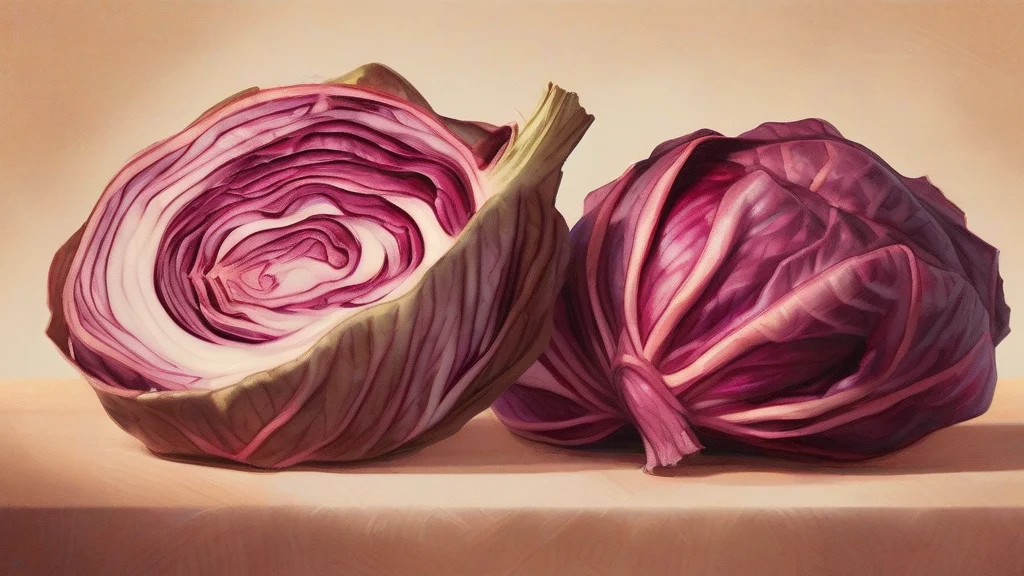
Radicchio is a cultivated variety of chicory whose tightly packed leaves are usually reddish-purple and have a distinctly bitter, slightly earthy flavour. It can be eaten raw in salads, but it is also frequently roasted, grilled, or braised, methods that soften its bitterness and concentrate its sweetness. The vegetable appears in dishes such as risotto, pasta, pizza, and braised side dishes, and its vivid colour makes it a familiar part of Italian and contemporary European cooking. Although radicchio is related to Belgian endive and other chicories, its dark leaves and concentrated flavour distinguish it from the paler varieties. The word is normally used as a mass noun when referring to the vegetable as food, especially in phrases such as “roasted radicchio” or “radicchio salad.” Its unusual name preserves the vegetable’s Italian and Latin botanical heritage, making it one of the more distinctive names in everyday food vocabulary.
nounA variety of chicory with tightly packed reddish-purple leaves and a bitter flavour, eaten raw or cooked.
- The reddish-purple, bitter-flavoured leaves of a cultivated chicory, eaten as a vegetable.
"Roasted radicchio served with grilled fish and lemon."
"Toss the roasted radicchio with olive oil, garlic, and a little lemon juice."
"The restaurant serves a radicchio risotto topped with shaved Parmesan."
The plural is grammatically possible but uncommon; radicchio is normally treated as a mass noun.
"The market displayed several radicchios alongside green cabbage."
Radicchio carries its botanical history in its name: it ultimately comes from the Latin word for “root.”
Reviewed by Deb Chak, Editor. AI-assisted content curated by RJS Tech Solutions LLP.
Where does radicchio come from?
The English word was borrowed from Italian radicchio in the early 17th century. The Italian name ultimately derives from Latin radix, meaning “root,” through a form based on radice. Radicchio is related etymologically to radical, radish, radicle, and radicular because all trace their ancestry to the same Latin root.
How radicchio is actually used
Radicchio is common in Italian-influenced European and North American cooking. Its bitterness is often mellowed by roasting, grilling, or mixing with sweeter ingredients.
Easily confused with radicchio
Radicchio is a cultivated variety of chicory, while chicory can refer to the broader plant and to related leaves and roots.