
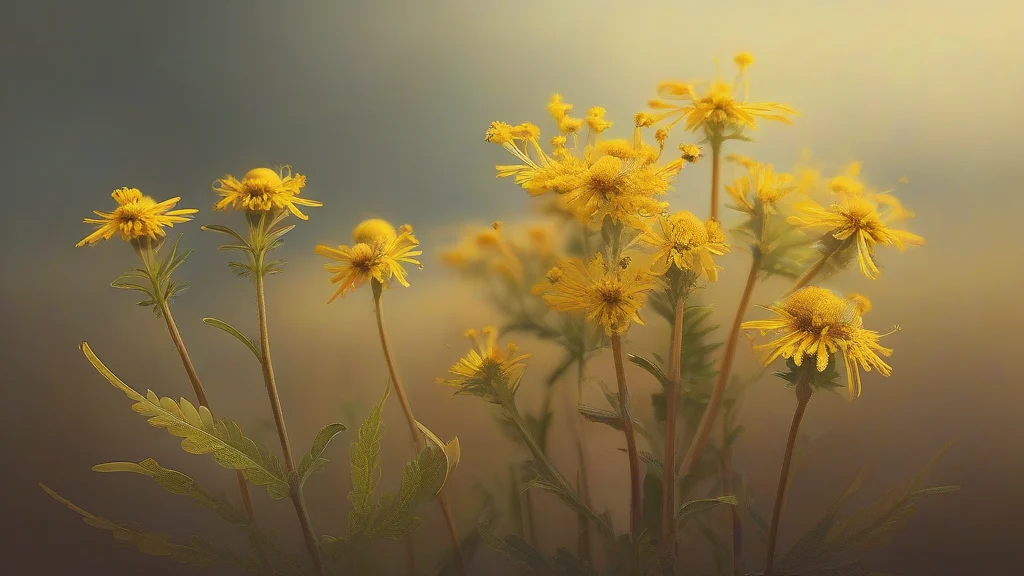
What does ragwort mean?
Ragwort is a common name for a group of yellow-flowered plants in the daisy family, most famously common ragwort, Senecio jacobaea. It occurs widely in meadows, roadsides, grazing land, and other disturbed ground, where its conspicuous flower clusters can transform an otherwise green landscape. The name combines “ragged,” referring to the plant's deeply divided or ragged-looking leaves, with “wort,” an old word for a plant or herb. Although attractive to insects, ragwort contains toxic compounds and is particularly concerning in farmland because cattle, horses, and other livestock may avoid fresh growth but eat it when it becomes wilted in hay. For this reason, ragwort is often treated as an invasive or troublesome weed, even though it is also valued in some habitat-management contexts as a source of nectar.
nounRagwort is a common name for several species of flowering plants in the daisy family, especially the yellow-flowered Senecio jacobaea. The plant is native to Europe and parts of Asia and North Africa and is often considered a troublesome weed in pastures.
- A common name for several yellow-flowered plants in the daisy family, particularly Senecio jacobaea.
- In Britain and Ireland, especially the common ragwort, a biennial or perennial plant with deeply divided leaves and clusters of yellow flower heads.
"The meadow was dotted with bright yellow ragwort, much to the dismay of the beekeeper."
"She pulled up a clump of ragwort growing beside the footpath."
"Livestock should be kept away from pastures where ragwort is abundant."
Normally used as a mass noun for the plant or plant type; the plural can refer to individual plants.
"Several ragworts grew along the railway embankment."
Ragwort's bright yellow flowers can carpet meadows, but its bitter, toxic foliage makes it unwelcome in grazing land.
Reviewed by Deb Chak, Editor. AI-assisted content curated by RJS Tech Solutions LLP.
Where does ragwort come from?
The name ragwort is a compound of the adjective “ragged” and the Old English plant-name element “wort,” meaning a plant or herb. The “ragged” element refers to the deeply cut leaves of the plant. Related English words include “ragged,” “raggedly,” and “raggedness,” while “wort” survives in several herb names, including dandelion, St John's wort, and feverwort.
How ragwort is actually used
Ragwort is most often used as a plant name. In British English it commonly refers to the plant Senecio jacobaea; in North American usage, the name can also apply more broadly to related species, including tansy ragwort. The plant contains toxic pyrrolizidine alkaloids, so it can be hazardous to livestock.
Easily confused with ragwort
Ragwort is a yellow-flowered plant in the daisy family, whereas ragweed is a separate group of plants whose pollen is a common cause of hay fever.