
What does railwayman mean?
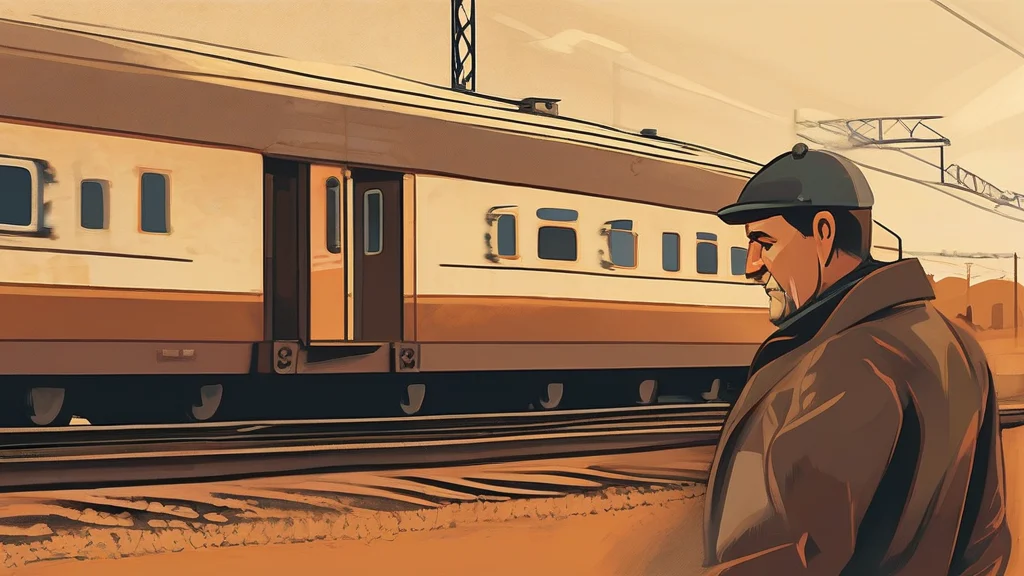
A railwayman is a man who works for a railway, traditionally especially a train driver but also used more broadly for employees involved in railway operations and maintenance. The word is chiefly associated with British and Irish English and has an old-fashioned, nostalgic quality that can evoke the era of steam railways and railway staff. In modern usage, “railway worker” is generally clearer and more inclusive, while “railroad employee” is the usual American equivalent. Although the expression remains understandable, it is not the preferred term in contemporary transport, employment, or historical contexts. Its strongest traditional association is with the driver of a train, particularly in British accounts of railway work and railway history. The word is also explicitly gendered, so neutral alternatives are preferable when a speaker’s or subject’s gender is not relevant.
nounA man who works for a railway, especially a train driver. The term is now less common than the more general word “railway worker.”
- A man employed by a railway, especially a train driver.
- A man who works in railway operations or maintenance.
"The railwayman signalled that the track ahead was clear."
"An elderly railwayman recalled the first trains that crossed the bridge."
"The railwayman checked the signal before allowing the passenger train to proceed."
The regular plural changes the final “-a” of “man” to “-e.”
"The railwaymen gathered beside the track after the signal failure."
Once, a railwayman could mean the man in charge of the engine, an occupational label that now sounds as nostalgic as steam and steam.
Reviewed by Deb Chak, Editor. AI-assisted content curated by RJS Tech Solutions LLP.
Where does railwayman come from?
The word was formed in English by combining “railway” with the suffix “-man,” a productive pattern for naming male workers and occupations. It became established during the nineteenth century as railways expanded and railway employees acquired recognizable occupational roles. Its form reflects British English usage, while the American vocabulary generally developed the parallel term “railroad employee” and, for train drivers, “engineer.”
Related word forms
How railwayman is actually used
The term is chiefly associated with British and Irish English and is somewhat old-fashioned. It is not normally used in American English, where “railroad worker” or “railroad employee” is preferred. The word is gendered because it ends in “-man,” so “railway worker” is preferred when referring to people of any gender.
Easily confused with railwayman
A railwayman is a male railway employee, often specifically a train driver, whereas “railway worker” can refer to any railway employee of any gender.
A railman works on a railway or in railway operations, while a railwayman traditionally denotes a railway employee, especially a train driver.