
What does rake mean?
A rake is, first, a garden tool with teeth at the end of a long handle, used to gather leaves, grass, and other loose material. From that concrete sense, the verb extends to the act of using the tool and to related actions such as scraping, smoothing, or searching thoroughly. Rake also appears in figurative expressions: to rake someone over the coals means to criticize them severely, while to rake over means to examine something carefully, and to rake up means to gather scattered information or resources. The noun has a dated informal and literary sense for a fashionably dressed, extravagant man. In contemporary English, the most frequent uses are the gardening noun, the gardening and searching verbs, and the figurative expressions for concentrated criticism, attention, or inspection. The word is recognizable, straightforward, and useful because it links a familiar physical tool with several vivid descriptions of gathering and searching.
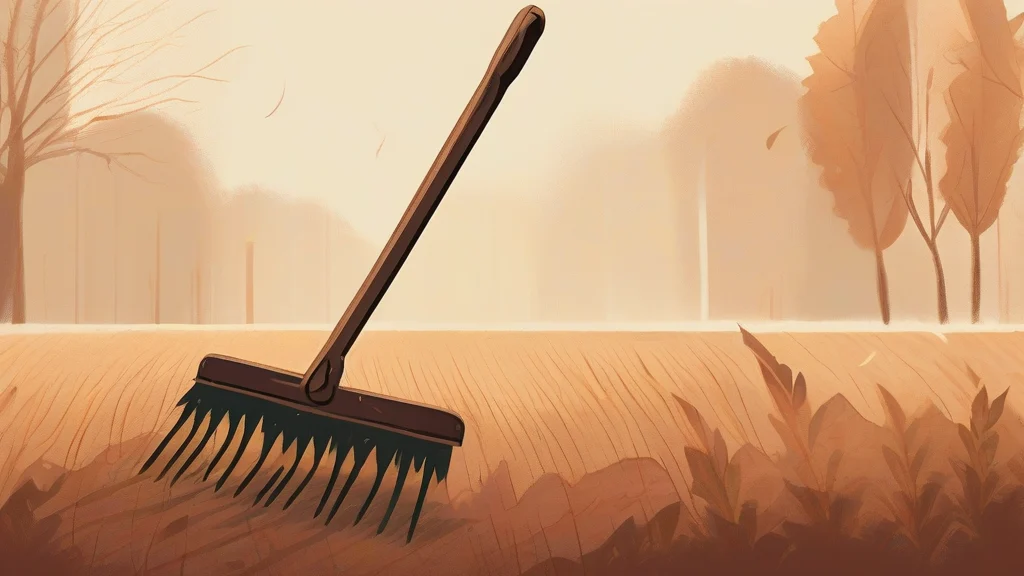
A long-handled implement with teeth used to gather leaves, grass, or other loose material from the ground.
"The leaves were piled high beside the garden rake."
This is the ordinary modern meaning in British and American English.
Informally, a man associated with fashionable or extravagant behavior; in older usage, a fashionable rake.
"The novel portrays him as a charming but reckless rake."
This sense is dated, literary, and somewhat disparaging.
To gather, remove, or smooth material using a rake or a similar tool.
"They raked the lawn and gathered the dry leaves."
Usually used with leaves, grass, soil, or another loose material.
To search or inspect something thoroughly, especially a place, collection, or body of information.
"Investigators raked through the records for several weeks."
Common in formal and journalistic writing.
The standard plural of the noun. As a verb, the third-person singular present form is also rakes, but this is not a plural form.
"The workers repaired several old rakes in the shed."
From a tool that gathers scattered leaves to a metaphorical phrase for intensely focusing on a subject, rake has moved easily from gardens into everyday speech.
Reviewed by Deb Chak, Editor. AI-assisted content curated by RJS Tech Solutions LLP.
Where does rake come from?
The ordinary noun and verb descend from Old English terminology for a toothed implement used to gather leaves and soil. The word's later figurative senses developed from the idea of moving over or through something with a sweeping, searching motion. Modern forms such as raking and raker are derived directly from this inherited English word.
Related word forms
How rake is actually used
The noun is standard in British and American English. The verb meaning to inspect thoroughly is common in formal and journalistic contexts, while the informal meaning criticize harshly is more common in speech than in formal writing. The sense meaning a fashionable, extravagant man is dated or literary and can sound disparaging.