
What does rampaging mean?
Rampaging is the present-participle form of rampage, meaning to move or behave with violent, uncontrolled energy. The word often describes a crowd charging through a place, a mob causing destruction, or a storm or other force moving violently across an area. It is more forceful than simply moving quickly or noisily, because it suggests a loss of restraint and the potential for damage or disorder. “Rampaging” can also serve as an adjective before a noun, as in “a rampaging crowd” or “rampaging weather.” The expression is especially common in journalism, where it can vividly convey chaos and danger, although its dramatic tone may occasionally feel sensational. In everyday use, it describes events perceived as wild, uncontrolled, and disruptive rather than merely energetic or enthusiastic.
verbTo move or act with violent, uncontrolled energy, especially by running, charging, or causing destruction. It can also describe a person or group behaving in this way.
- To move or act with violent, uncontrolled energy; to charge, storm, or wreak destruction.
"The protesters rampaged through the city, overturning vehicles and damaging storefronts."
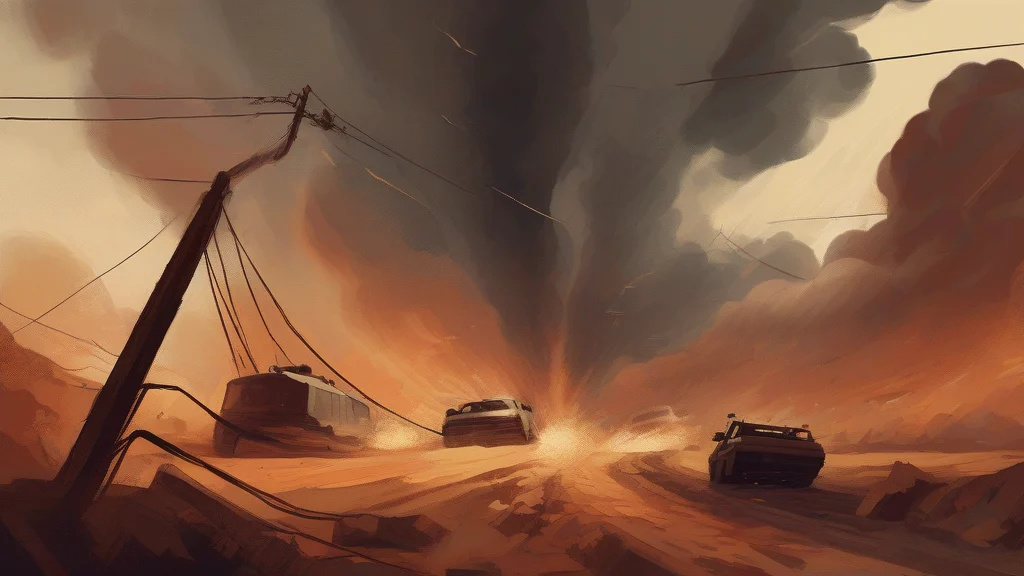
"The storm rampaged across the countryside overnight, uprooting trees and flooding roads."
"After the announcement, fans rampaged through the concourse, chanting and celebrating."
Rampaging turns controlled movement into a scene of wild energy: crowds charge, storms lash, and normal rules temporarily disappear.
Reviewed by Deb Chak, Editor. AI-assisted content curated by RJS Tech Solutions LLP.
Where does rampaging come from?
The word comes from rampage, which entered English in the early 17th century from French. Its deeper origin is associated with the French verb meaning to climb, rush, or move with force. English later developed the form rampager for a person who rampages, while rampaging continued the verbal pattern of the base word. Related forms include the archaic adjective rampageous, meaning wild or disorderly.
Related word forms
How rampaging is actually used
Usually describes disruptive, violent, or intensely chaotic activity. It is commonly journalistic and may carry a strongly negative or sensational tone, especially when used of people or crowds.
Easily confused with rampaging
Rampage is the noun or the base form of the verb, while rampaging is the present-participle form, as in “the crowd is rampaging.”