What does rance mean?
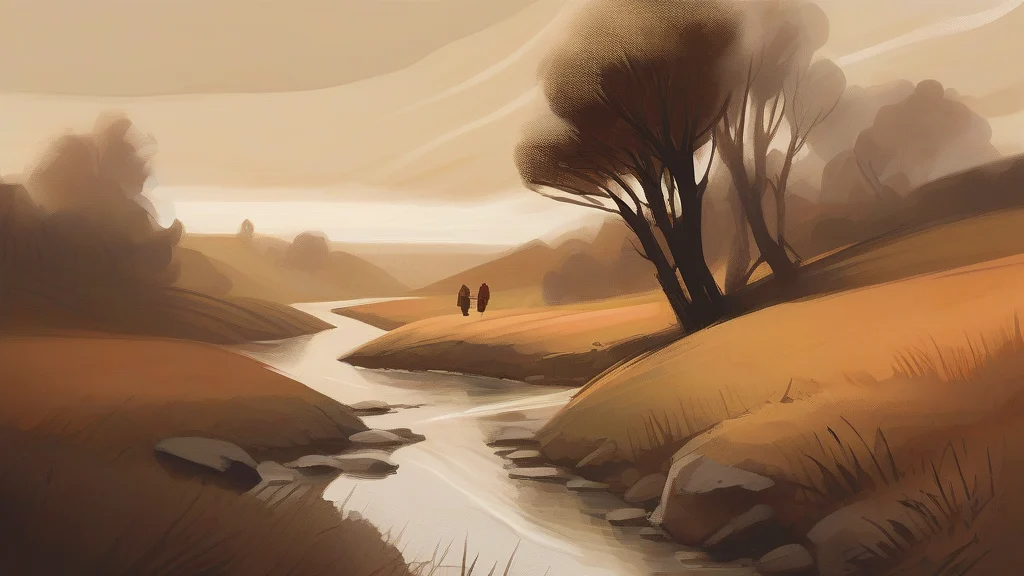
A rance is a small, narrow stream or brook, often found in rural areas. It is a natural feature that can be used for irrigation, fishing, or simply as a peaceful place to walk. The term 'rance' is often used in British English to describe a small stream or brook, while in American English, it may refer to a small, narrow river. The word has its roots in French and Latin, with the Old French word 'ranc' meaning 'stream' or 'brook'. In modern usage, the term 'rance' is often used in a descriptive or poetic sense, evoking a sense of peace and tranquility. Whether used to describe a small stream or a narrow river, the word 'rance' is a useful term for those who want to describe a natural feature in a precise and evocative way.
nounA rance is a small, narrow stream or brook, often found in rural areas.
- A small, narrow stream or brook.
"The hikers followed the rance through the forest, enjoying the peaceful surroundings."
"The hikers followed the rance through the forest, enjoying the peaceful surroundings."
"In the village, the rance was used for irrigation."
The plural form 'rances' is used to describe multiple small streams or brooks.
"The village had several rances that flowed into the river."
Reviewed by Deb Chak, Editor. AI-assisted content curated by RJS Tech Solutions LLP.
Etymology of rance
The word 'rance' has its roots in Old French, where it was used to describe a small stream or brook. The Old French word 'ranc' is derived from the Latin word 'rancus', which means 'stream' or 'brook'. The term 'rance' was later adopted into Middle English, where it has been used to describe a small, narrow stream or brook ever since.
How rance is actually used
In British English, a rance is often used to describe a small stream or brook, while in American English, it may refer to a small, narrow river.