
What does raven mean?
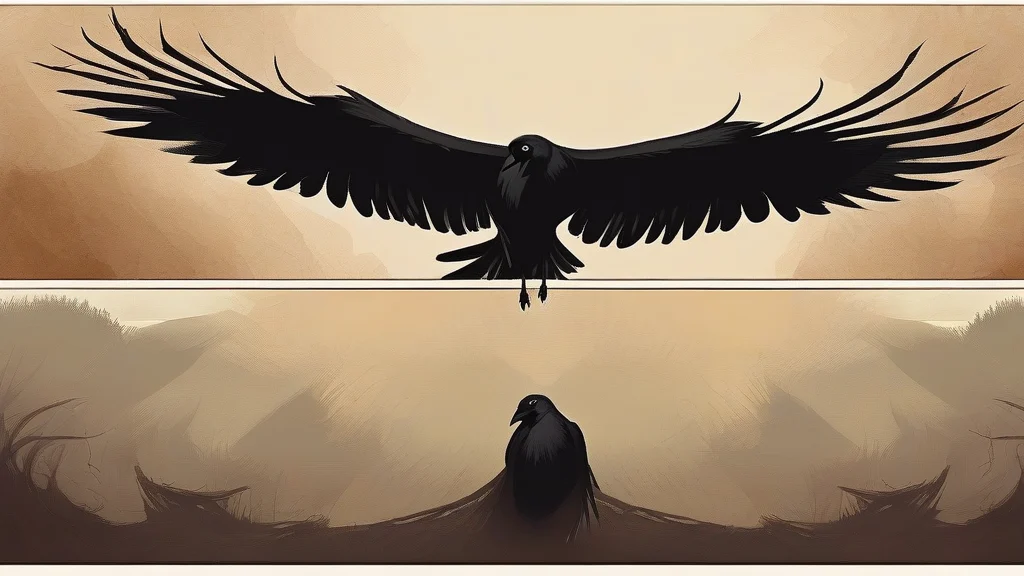
A raven is a large corvid, closely related to crows, jackdaws, and rooks. The best-known species, the common raven, is predominantly black, with a powerful bill, shaggy throat feathers, and a deep, resonant call. Ravens occur throughout the Northern Hemisphere and are especially associated with cold, rugged landscapes. Beyond its zoological meaning, the raven carries a strong cultural association with death, bad omens, prophecy, and secret knowledge, appearing in traditions ranging from ancient European folklore to modern literature. This symbolic image reflects both the bird's conspicuous presence and its intelligent, adaptable behavior. Ravens are capable problem-solvers, recognize individual human faces, and maintain complex social relationships. In ordinary usage, however, “raven” normally refers simply to the bird; the darker figurative senses depend on literary or cultural context.
A large member of the crow family, especially the common raven, typically black with a heavy bill and a harsh call.
"Two ravens circled above the windblown ridge."
The word also commonly denotes the raven as a symbol of death, mystery, or prophetic knowledge in literature and folklore.
To eat or feed voraciously.
"The exhausted soldiers ravened at the remains of their meal."
This sense is literary or archaic and is rarely used in modern everyday English.
The standard plural of the noun; a group of ravens may be called a murder, though this collective noun is chiefly used in reference to ravens and crows.
"Several ravens gathered on the dead oak."
A raven's reputation as a bird of ill omen is only part of its story: ravens are exceptionally intelligent problem-solvers with complex social lives.
Reviewed by Deb Chak, Editor. AI-assisted content curated by RJS Tech Solutions LLP.
Where does raven come from?
The word comes from Old English hræfn, the name of the common raven. It has close cognates in Old Norse rafn and Old High German raban. The separate words “ravage” and “ravish” descend through French from Latin rapere, “to seize or plunder,” so their connection with raven is etymological rather than a direct development of the bird's name.
How raven is actually used
The noun is standard in British and American English. The verb is now mainly literary or archaic, while the raven's associations with death and ominous knowledge come chiefly from folklore, mythology, and literature.
Easily confused with raven
A crow is a smaller member of the corvid family, whereas the common raven is larger, has a heavier bill, and a deeper, more resonant call.