
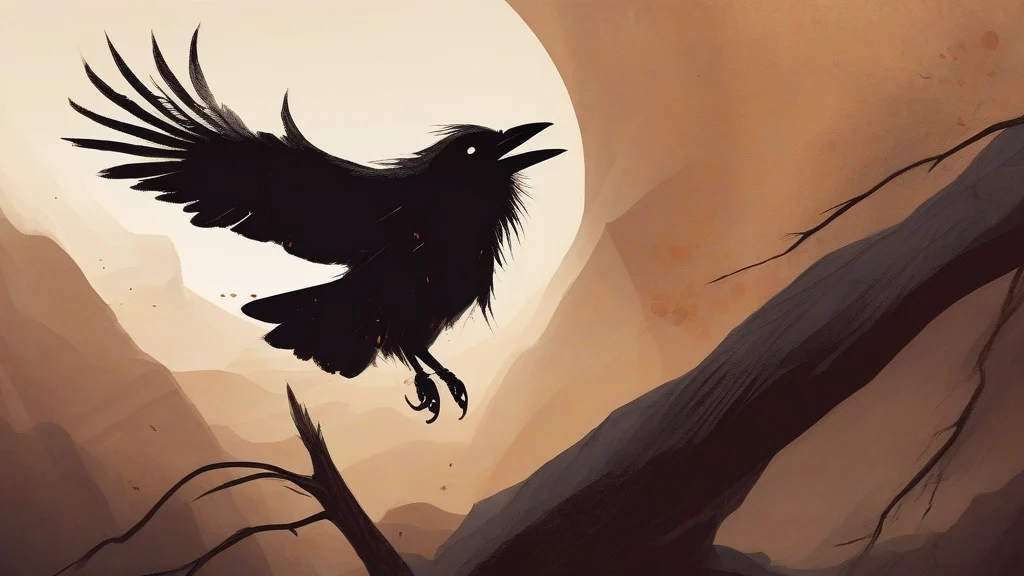
What does ravenlike mean?
Ravenlike means resembling a raven or sharing qualities traditionally associated with it. Literally, the adjective can describe black plumage, a dark silhouette, a keen gaze, or a birdlike manner of movement. Figuratively, it evokes something dark, severe, ominous, or menacing, often without implying that the comparison is literal. The word is most often encountered in literature, poetry, descriptions of landscapes, and dramatic characterisations. It is more specific and vivid than a general word such as “dark,” because it recalls the raven’s distinctive appearance and the cultural associations that have gathered around the bird. In descriptive prose, “ravenlike” can suggest an austere or forbidding presence, while “raven-haired” may be more appropriate when the intended comparison is specifically to the bird’s colouring.
adjectiveResembling a raven, especially in appearance, dark colouring, or an ominous presence.
- Resembling a raven in appearance, colour, character, or movement.
"A pair of ravenlike birds circled above the ruined tower."
"The bird watched from the branch with a ravenlike stillness."
"Storm clouds gathered above the bleak, ravenlike landscape."
Ravenlike captures the raven’s dark plumage, stark presence, and unmistakable silhouette in a single vivid adjective.
Reviewed by Deb Chak, Editor. AI-assisted content curated by RJS Tech Solutions LLP.
Where does ravenlike come from?
Ravenlike is a compound formed from “raven” and the suffix-like element “like,” meaning “resembling.” The two elements have long been used separately in English, and combining them in this form follows the productive English pattern of joining a noun with “like” to create a descriptive adjective. Its association with the raven’s dark appearance and ominous reputation is grammatical rather than a special historical allusion.
How ravenlike is actually used
Chiefly literary or poetic. It may describe physical appearance literally or evoke darkness, severity, ominousness, or a threatening bearing figuratively.