
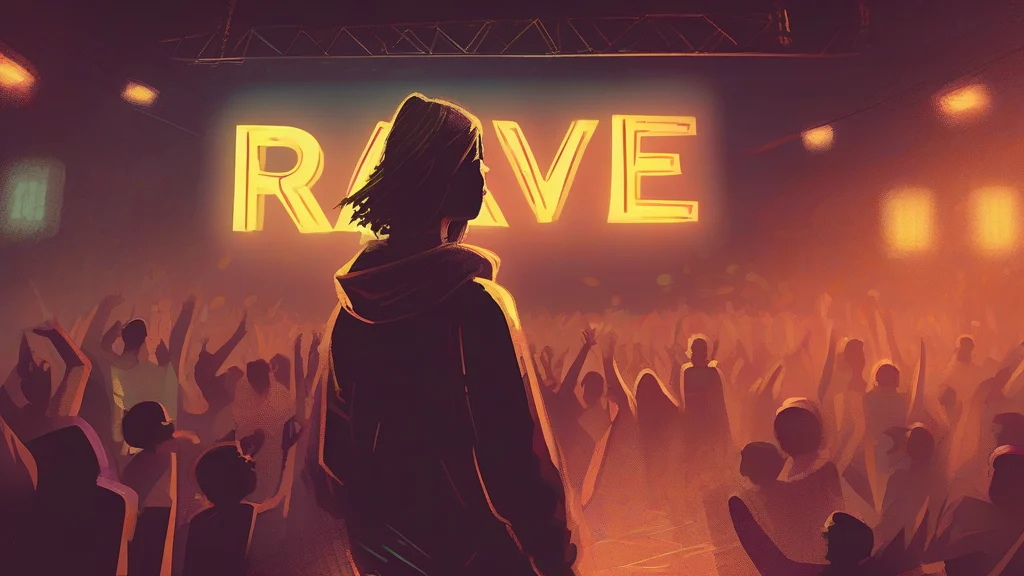
What does rave mean?
Rave is an informal word for expressing exceptionally enthusiastic approval. People may rave about a performer, album, film, product, or idea, and a review or reception described as rave is overwhelmingly positive. The same enthusiasm gives rise to the noun sense 'an expression of praise' and to the adjective use in phrases such as 'rave reviews'. Since the late 20th century, rave has also referred to large dance parties featuring electronic music, often associated with club and underground scenes. An older, less common sense of the verb means to speak wildly or irrationally. Although its enthusiastic tone can sound hyperbolic, rave communicates approval more forcefully than ordinary words such as praise or admire. It is especially idiomatic in British and American informal English and commonly appears with 'about', 'reviews', 'reception', and 'party'.
An expression of enthusiastic praise or approval; also, in modern usage, a large dance party featuring electronic music.
"The performance earned a rave from audiences across the country."
The party sense is especially associated with electronic dance music and club culture.
To speak or write about something with great enthusiasm and praise; less commonly, to speak wildly or irrationally.
"She raved about the novel's vivid descriptions of city life."
Usually informal and often used with 'about'.
Enthusiastically praised or regarded as highly successful.
"The concert received rave reviews from critics and fans alike."
Common chiefly in the informal fixed expressions 'rave reviews' and 'rave reception'.
The plural can refer to expressions of enthusiastic praise or, in the modern music sense, to dance parties.
"The festival is known for its late-night raves."
One word can mean enthusiastic praise, a wildly enthusiastic comment, and the celebrated dance party that gave modern rave culture its name.
Reviewed by Deb Chak, Editor. AI-assisted content curated by RJS Tech Solutions LLP.
Where does rave come from?
Rave is recorded in Middle English, with its early uses associated with speaking loudly, wildly, or with intense excitement; the precise medieval origin of the word is uncertain. Over time, its meaning developed toward enthusiastic or highly excited speech, including the modern informal sense of praising something strongly. The later noun meaning a dance party emerged from late-20th-century electronic music and club culture.
Related word forms
How rave is actually used
As a verb and adjective, rave is mainly informal and strongly enthusiastic, often implying unusually emphatic approval. In British English, 'rave about' is particularly common. The noun meaning a dance party is associated with electronic music and late-20th-century club culture; the older sense of speaking wildly or irrationally is now less frequent.