
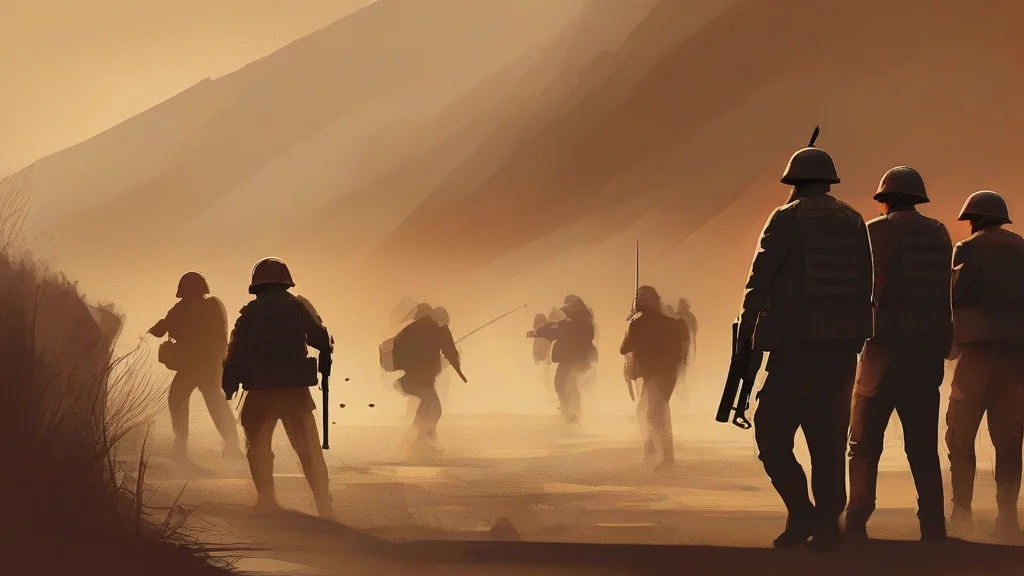
What does rearguard mean?
A rearguard is a guard or protective force placed at the back of an army, convoy, or retreating group. Its purpose is to watch for approaching enemies, resist pursuit, and delay or discourage attackers while the main body moves away. The term also has a broader figurative meaning: any defensive action taken to protect a position, organization, or plan from pressure, especially when that action is intended mainly to buy time. A famous rearguard action can involve a small force facing a much larger enemy, so the word often evokes courage, sacrifice, and a determined last stand. In modern political and business writing, it may describe unsuccessful resistance to change or a defensive measure adopted during retreat. The expression is both literal and metaphorical, but it is most firmly associated with military withdrawal and pursuit.
A guard or force stationed at the rear of an army or other body to protect it from attack or pursuit; also, a defensive action or arrangement serving a similar protective function.
"The regiment provided the rearguard during the retreat to the border."
The word is especially associated with military withdrawals and delaying actions. Its figurative use can imply that the defence is defensive or provisional rather than a decisive victory.
To protect or defend the rear of a force or, figuratively, to provide defensive support against pressure.
"Local volunteers rearguarded the evacuation convoy until it reached the coast."
This verb is relatively uncommon compared with the much more frequent noun.
The plural is used when referring to more than one rearguard force or to several separate defensive units.
"The retreating columns formed temporary rearguards at several river crossings."
A rearguard turns the army's back into a fortress, buying time with a last stand as the rest of the force withdraws.
Reviewed by Deb Chak, Editor. AI-assisted content curated by RJS Tech Solutions LLP.
Where does rearguard come from?
Rearguard combines the English word “rear,” meaning the back or last part of a formation, with “guard,” a defensive force or person responsible for watching against danger. The compound developed as a military term for troops assigned to cover the rear of a force. “Guard” comes through Old French garde from the Latin custodia, while “rear” continues Old English rera.
Related word forms
How rearguard is actually used
The noun is common in military history and figurative descriptions of a defensive stand. In figurative use, it often suggests a delaying or defensive action undertaken while something else is under threat, and may carry a slightly negative implication of retreat or limited prospects.