
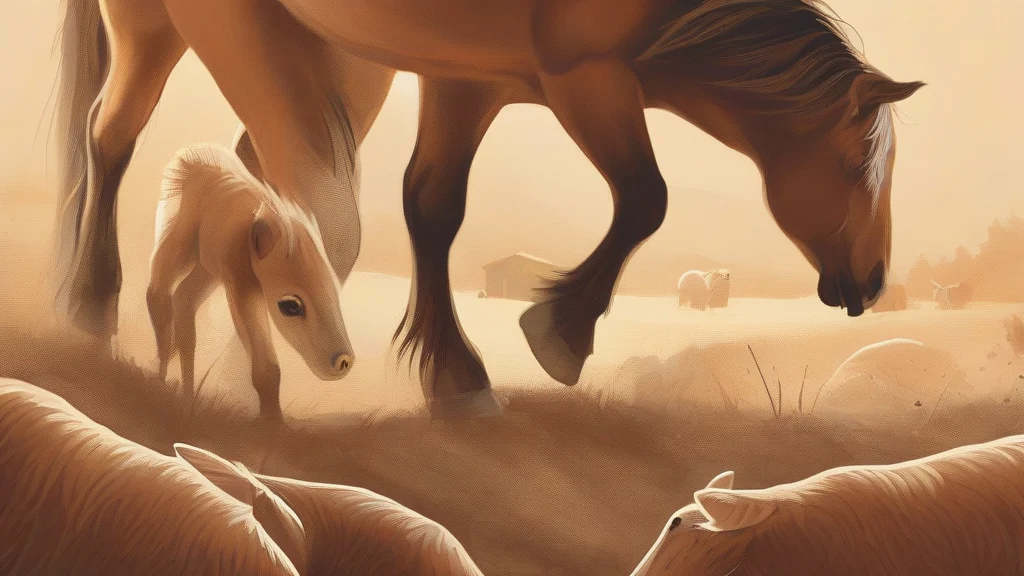
What does rearing mean?
Rearing has several related meanings, all connected with lifting, rising, or bringing something into being. Most literally, it describes a horse or other animal rising up on its hind legs. It can also mean caring for and bringing up a child or animal, as in phrases such as rearing cattle or being reared in a particular community. Figuratively, to rear up means to become openly defiant or resistant, especially in political or social contexts. The word is especially vivid when describing an animal’s sudden upward movement, but it is also used formally for the upbringing of children and the raising of livestock. Its broad range—from physical elevation to upbringing and revolt—makes it a useful word in both literal and figurative writing.
To rise or stand up on the hind legs, especially a horse.
"The horse reared suddenly as the dog approached."
Often used with animals, particularly horses, and transitive forms such as “reared its head” are also common.
To bring up, nurture, or care for a child, animal, or other creature during its early development.
"They reared several generations of sheep on the hill farm."
Common in British and American English; in the sense of upbringing, it often has a traditional or rural association.
To rise up in anger, rebellion, or resistance.
"The communities reared up against the proposed development."
This is a formal or literary figurative use, often associated with political resistance.
A rearing horse can turn a quiet moment into chaos with a single leap.
Reviewed by Deb Chak, Editor. AI-assisted content curated by RJS Tech Solutions LLP.
Where does rearing come from?
The verb developed in Middle English from Old English rǣran, meaning “to raise” or “to lift,” with a strong sense of bringing someone or something upright. The Old English word belongs to a Germanic family that also includes cognates related to the modern verb raise, while later forms such as raring preserve the same basic meaning. Its modern meanings—standing on the hind legs, bringing up offspring, and rising in revolt—developed through the central idea of lifting something or oneself up.
Related word forms
How rearing is actually used
The word is formal or literary in many figurative senses, especially in the meaning of rising up in revolt. When used for children or animals, it is common in British and American English but often suggests a traditional or slightly old-fashioned upbringing.
Easily confused with rearing
Raising is the general act of making something or someone higher, while rearing more specifically refers to rising on the hind legs or figuratively rising up in resistance.