
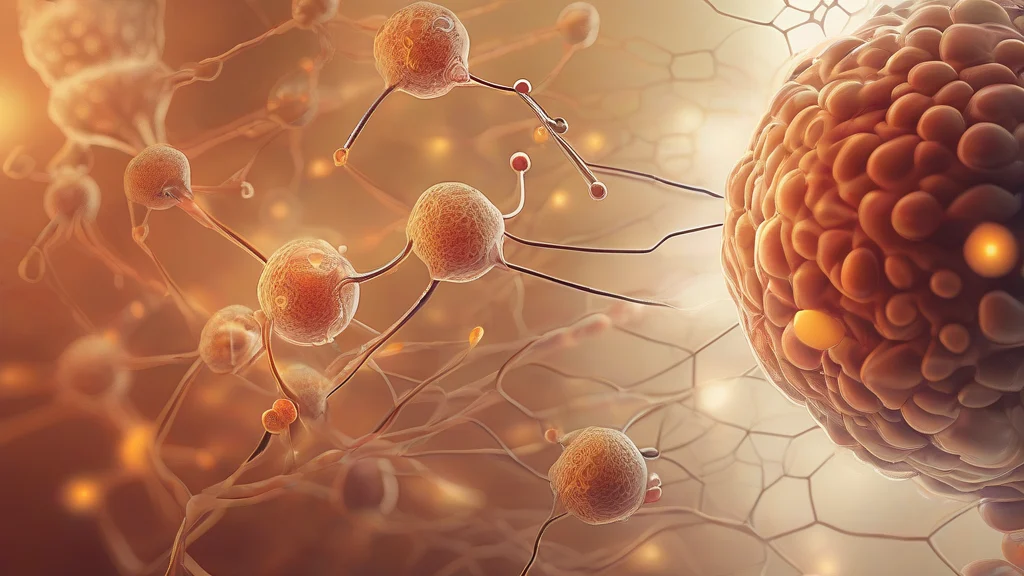
What does receptor mean?
A receptor is a biological structure that detects a signal and converts it into a response. Most commonly, the word refers to a protein, often located on the surface of a cell, that recognizes and binds a particular molecule, such as a hormone, neurotransmitter, or drug. Once activated, the receptor helps initiate signaling pathways that can alter cell behavior, metabolism, growth, or communication. In a broader anatomical sense, a receptor is a sensory structure that receives stimuli and transmits information. The word is especially important in medicine, neuroscience, pharmacology, and molecular biology because many treatments work by activating or blocking particular receptors. Its everyday use is uncommon, but the concept is central to understanding how cells communicate and how the body senses its environment.
A specialized cell, membrane protein, or molecule that recognizes a signal and produces or initiates a response.
"Researchers identified a receptor that helps cells respond to insulin."
Usually modified by a signal type, location, or substance, as in “cell-surface receptor” or “hormone receptor.”
A sensory organ or nerve ending that receives a stimulus and conveys it toward the central nervous system.
"The receptor detects changes in temperature."
This broader anatomical sense is less common than the molecular-biology meaning.
The plural is used routinely in biology, medicine, and pharmacology.
"The drug acts on receptors throughout the nervous system."
Your body is covered in molecular receptors, tiny biological sensors that turn invisible chemical signals into cellular action.
Reviewed by Deb Chak, Editor. AI-assisted content curated by RJS Tech Solutions LLP.
Where does receptor come from?
The English word receptor comes from Latin receptor, a form of the participle of recipere, meaning “to receive” or “to take back.” The same Latin root produced English words such as receive, recipient, receptacle, and receptive. The term entered English through Latin during the early modern period, initially in contexts involving receiving or taking, before becoming established in biological and physiological senses.
Related word forms
How receptor is actually used
In modern biological usage, receptor usually refers to a protein or related molecular structure. In anatomy and neuroscience, it may also be used more broadly for a sensory organ or the terminal structure of a nerve. The term is technical and is most common in medicine, biology, biochemistry, and pharmacology.
Easily confused with receptor
A receptor receives or detects a signal, whereas an acceptor receives something offered or transferred to it, such as a chemical reactant or payment.