
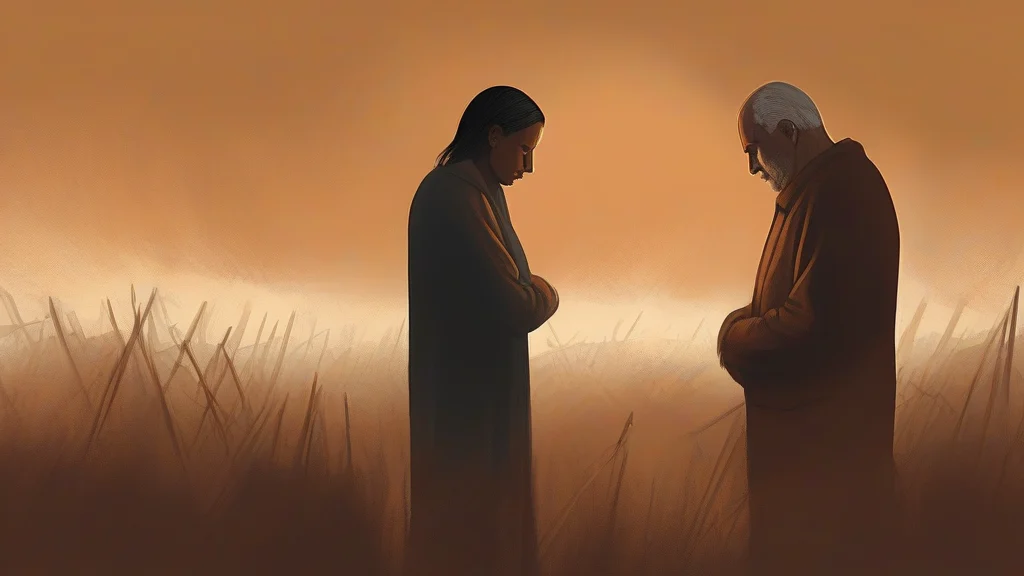
What does reconciliation mean?
Reconciliation is the process of restoring peace, agreement, or friendly relations after conflict, disagreement, or estrangement. It is used especially in political, social, legal, and personal contexts, where it may involve negotiation, acknowledgment of harm, apology, compromise, or the rebuilding of trust. The word can also refer more generally to settling a dispute, such as reconciling conflicting accounts or differences between two positions. Reconciliation does not necessarily mean that the causes of a conflict have disappeared or that everyone has forgiven one another; it describes movement toward mutual understanding and a workable relationship. Although the term is often formal and serious, it is not limited to international or historic conflicts. It can describe a family dispute, a workplace disagreement, or divisions within a community. Its usefulness lies in capturing both the practical act of resolving conflict and the broader social goal of renewed cooperation.
nounThe process of restoring friendly relations, agreement, or harmony after conflict or disagreement. It can also refer more broadly to settling differences or bringing opposing people, groups, or accounts into agreement.
- The restoration of friendly relations, peace, or mutual understanding after conflict, estrangement, or dispute.
- The act or process of settling differences, settling a dispute, or bringing opposing people, groups, or positions into agreement.
- The process of bringing financial accounts or records into agreement, especially by identifying and resolving discrepancies.
"The new accord was praised as a major step toward reconciliation between the two communities."
"After months of mediation, the two neighbors finally reached a reconciliation that both were willing to sustain."
"The reconciliation of the monthly accounts revealed several errors in the original records."
The standard plural form, used when referring to multiple processes, agreements, or instances of restoring harmony or settling differences.
"The two reconciliations took place in different parts of the country."
Reconciliation comes from Latin reconciliare, “to reconcile,” a word rooted in the idea of bringing divided parties back into harmony.
Reviewed by Deb Chak, Editor. AI-assisted content curated by RJS Tech Solutions LLP.
Etymology of reconciliation
The word comes through Old French from Latin reconciliatio, a noun formed from reconciliare, “to reconcile” or “restore to agreement.” The Latin root combines re-, indicating restoration, with a term related to restoring a relationship or bringing matters into accord. Its English descendants include reconcile, reconciler, and reconciliable, while the modern word has come to emphasize the settlement of conflict and the restoration of harmony.
How reconciliation is actually used
The word is common in formal, political, legal, and interpersonal contexts. It can describe either the process itself or the resulting agreement, and it often implies repairing a relationship rather than merely resolving a practical dispute.
Easily confused with reconciliation
Conciliation emphasizes efforts to appease or settle a conflict, whereas reconciliation more commonly suggests restoring an existing relationship or achieving lasting agreement.