
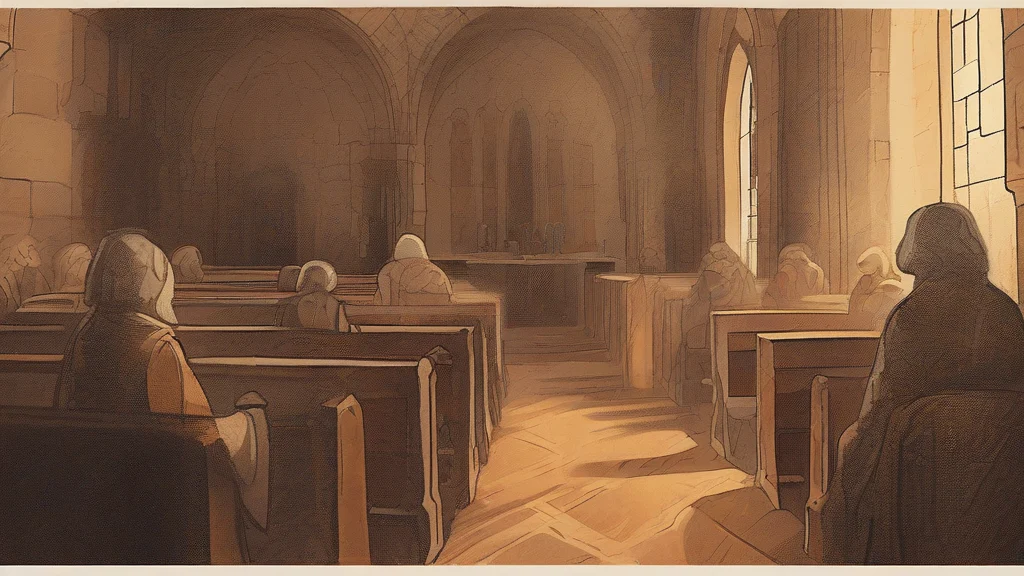
What does recusancy mean?
Recusancy is the state or practice of refusing to submit to authority or to comply with a rule. The word is best known from English history, where it described the refusal of Roman Catholics, and sometimes Protestant nonconformists, to attend services of the Church of England as required by law after the Reformation. Beginning in the reign of Elizabeth I, laws imposed fines, property penalties, and other disabilities on those who stayed away from the established church. Those who practised recusancy were known as recusants, and the term became closely tied to the survival of Catholic communities in England. Outside this historical setting, recusancy can describe any stubborn refusal to conform or obey, though that broader use is rare and somewhat literary. The word is therefore useful both as a precise label for a particular chapter of religious and political history and as a more elevated way of describing principled or obstinate non-compliance. It is related to the verb recuse, which in modern use usually refers to a judge withdrawing from a case.
nounThe state or practice of refusing to submit to authority or comply with a regulation; historically, the refusal of Roman Catholics and other Protestant nonconformists in England to attend services of the Church of England as required by law.
- Historical: the refusal, especially by Roman Catholics, to attend Church of England services as required by law in England from the 16th century onward.
- General: obstinate refusal to submit to authority or to comply with a rule or regulation.
"The family's long recusancy, kept up through fines and the constant threat of imprisonment, shaped their quiet reputation in the county."
"Penal statutes punished recusancy with heavy fines, forfeiture of property, and sometimes imprisonment."
"Her recusancy in the face of the committee's demands was read by some as principle and by others as plain stubbornness."
Rarely used in the plural; the word is normally uncountable.
"Historians have compared the recusancies of different regions to see how enforcement varied."
In Elizabethan England, simply staying home from church on Sunday could cost you a hefty fine, and that offense had a name: recusancy.
Reviewed by Deb Chak, Editor. AI-assisted content curated by RJS Tech Solutions LLP.
Where does recusancy come from?
Recusancy derives from recusant, which comes from the Latin recusare, meaning to refuse or object to, formed from re- and causa, meaning cause or reason. Recusant entered English in the 16th century, in the context of those who refused to attend the established church, and recusancy followed as the abstract noun. Related English words from the same Latin source include recuse and recusation.
Related word forms
How recusancy is actually used
A formal, mostly historical or scholarly term, found chiefly in discussions of Tudor and Stuart religious history. In its general sense it is rare and literary, and it carries a neutral to faintly archaic tone. Whether it reads as principled or merely stubborn depends on context.
Easily confused with recusancy
Recusal is a judge's or official's withdrawal from a case because of a conflict of interest, whereas recusancy is a refusal to conform to authority, especially in religious matters.
A recusant is the person who refuses to conform, while recusancy is the state or practice of doing so.