
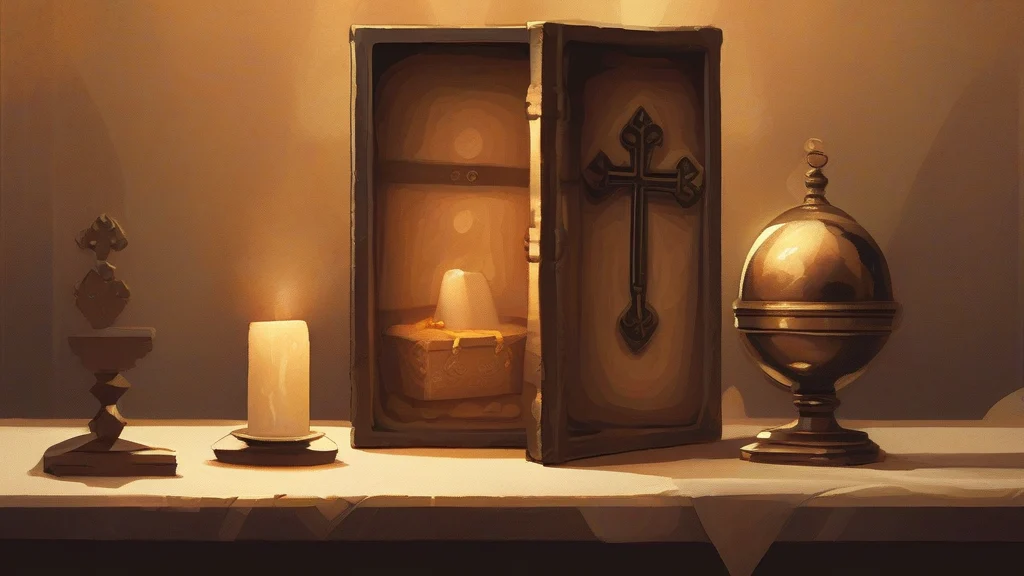
What does reliquary mean?
A reliquary is a specially made container for a religious relic, such as a bone, fragment of clothing, or object associated with a saint. Relics were highly valued in several religions, and medieval Christian reliquaries often combined precious materials with detailed craftsmanship to honour the sacred objects they held. Today the term is most common in historical and religious writing, as well as in descriptions of museum collections. It is more precise than “casket” because it identifies the container’s religious purpose, while “shrine” may refer either to the container itself or to the place where a relic is kept. The word evokes the preservation of sacred memory and the cultural importance traditionally attached to remains and personal objects of holy figures.
nounA container or receptacle used to hold religious relics, especially the remains or objects associated with a saint.
- A container for holding sacred relics.
"The medieval reliquary was displayed in the cathedral during the festival."
"The church commissioned a silver reliquary for the saint's finger bone."
"Visitors gathered around the reliquary, which was displayed behind glass."
The standard plural is reliquaries.
"Several reliquaries containing medieval relics were displayed in the museum."
Reliquaries turned fragments of saints’ remains into treasured works of medieval craftsmanship, often encased in gold, silver, and precious stones.
Reviewed by Deb Chak, Editor. AI-assisted content curated by RJS Tech Solutions LLP.
Where does reliquary come from?
Reliquary comes through French from the Latin reliquarium, a receptacle for relics. Its ultimate source is the Latin reliquiae, meaning “remains,” especially the remains of a saint or other revered person. The English word has been used since the medieval period for containers designed to protect and display such relics.
Related word forms
How reliquary is actually used
The word is primarily used in historical, religious, and museum contexts. It usually implies a container of special religious significance rather than an ordinary box or casket.