
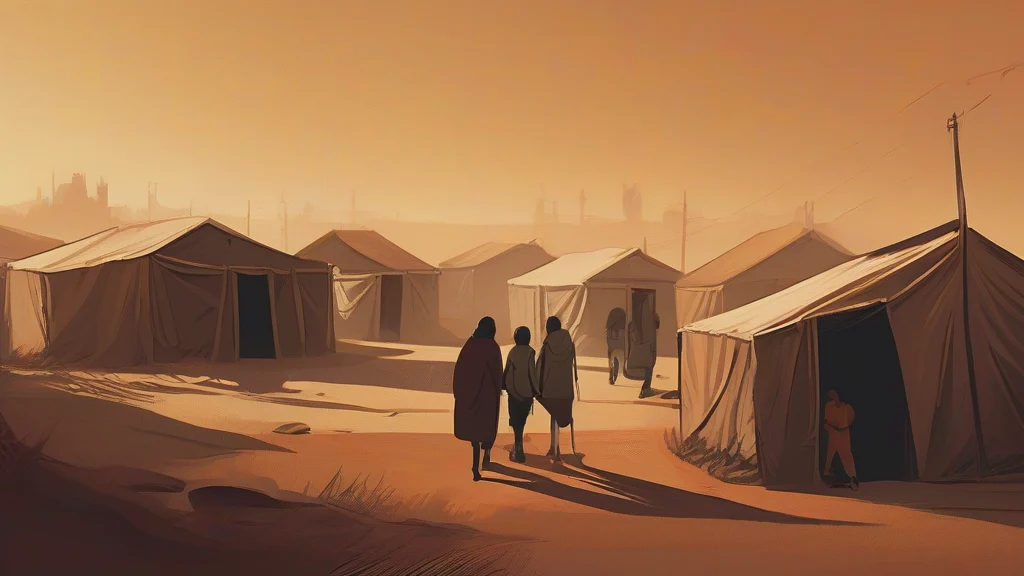
What does resettlement mean?
Resettlement is the process of moving people who have been displaced into a new place and helping them establish homes and lives there. It is used especially in discussions of refugees, migrants, evacuees, and communities affected by conflict, persecution, natural disasters, or redevelopment. The word can also describe the return of people or things to a former setting or condition. In public policy, “resettlement program” often refers to organized services involving housing, employment, education, language support, and community integration. Unlike the broader term relocation, resettlement commonly suggests a fresh beginning after displacement or disruption. It is also used in contexts beyond human populations, such as restoring wildlife or moving inhabitants from areas affected by development. The word has a broadly neutral, formal tone, though its humanitarian applications often carry an emphasis on safety, dignity, and long-term support.
The process of moving people into a new community after displacement, often with assistance designed to help them rebuild their lives.
"Resettlement support helped the families find housing and access schools for their children."
Frequently used in governmental, legal, and humanitarian contexts.
The act or process of returning something to a previous place, condition, or arrangement.
"The plan included the resettlement of fish after the construction disrupted their habitat."
This broader sense is less common than the use for displaced people.
The plural is uncommon in ordinary use but is grammatically standard when referring to separate instances of resettlement.
"The agency coordinated several resettlements for families affected by the flood."
Resettlement turns displacement into a second chapter: families often rebuild not only a home, but an entire community.
Reviewed by Deb Chak, Editor. AI-assisted content curated by RJS Tech Solutions LLP.
Where does resettlement come from?
Resettlement was formed in the 19th century from the prefix re-, meaning “again,” and the noun settlement. Its ultimate roots lie in the verb settle, which developed through Old English and was influenced by Anglo-Norman and Latin forms associated with sitting, resting, or taking a fixed position. Modern cognates include settlement, settler, and the verb resettle, all of which share the idea of becoming established in a place.
Related word forms
How resettlement is actually used
The term is common in government, humanitarian, legal, and academic contexts. It is often used for the planned relocation of displaced people and may therefore imply official assistance, housing, or integration support.
Easily confused with resettlement
Resettlement specifically means settling people or something again in a new place, while settlement can refer more generally to the act of settling or the place where people live.