
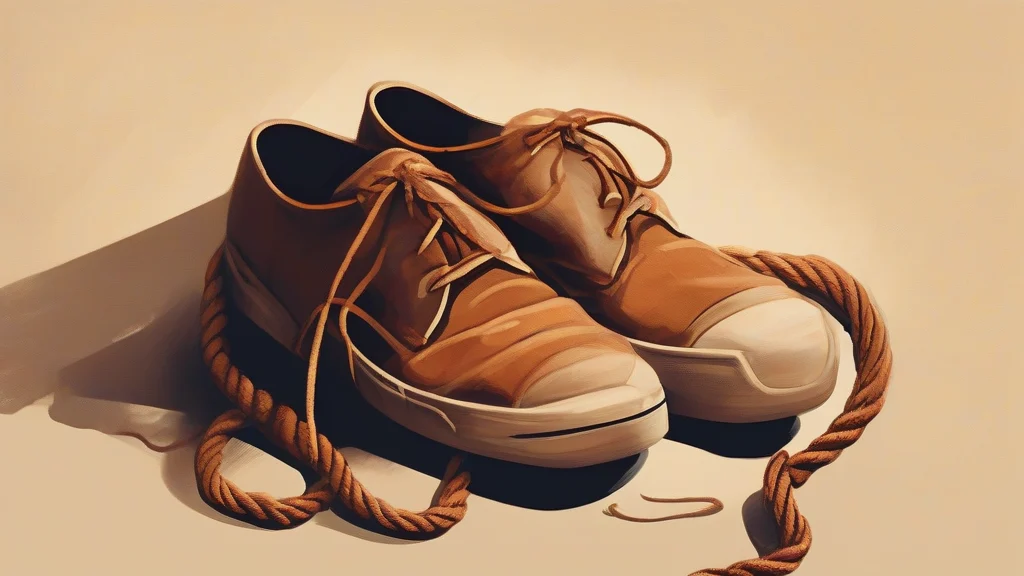
What does retie mean?
Retie means to tie or fasten something a second time. It is especially common when a knot, shoelace, ribbon, rope, or similar fastening has come loose, though the verb can also describe tying something again as part of a repeated process. The word is straightforward and neutral, combining the prefix re-, meaning “again,” with tie. In practical situations, retie is often used with articles such as “a knot,” “your shoes,” or “the rope,” and it can suggest restoring a fastening that has failed. Although the verb is relatively ordinary, it remains more precise than simply saying to tie again, since it clearly indicates a second attempt or a new act of fastening. It is widely understood in British and American English and is appropriate in both informal conversation and practical, professional instructions.
verbTo tie or fasten something again, especially a knot, shoelace, or other fastening.
- To tie or fasten something again.
"She had to retie her shoelaces after they came loose."
"The sailor retied the rope around the mast."
"I had to stop and retie my laces before I could continue walking."
Retie is the everyday verb for making a loose knot secure again.
Reviewed by Deb Chak, Editor. AI-assisted content curated by RJS Tech Solutions LLP.
Where does retie come from?
Retie was formed in English by combining the prefix re-, meaning “again,” with the verb tie. The prefix makes the repeated action explicit, a pattern also found in related formations such as remake and redo. The development is modern in form, reflecting the common English practice of adding re- to a verb when an action is performed again.
Related word forms
How retie is actually used
Retie is used when an object or fastening has become loose or when someone ties it again for any reason. It is common in both everyday and technical contexts.
Easily confused with retie
Retie means to fasten or tie something again, whereas retire means to stop working permanently or leave a place.