
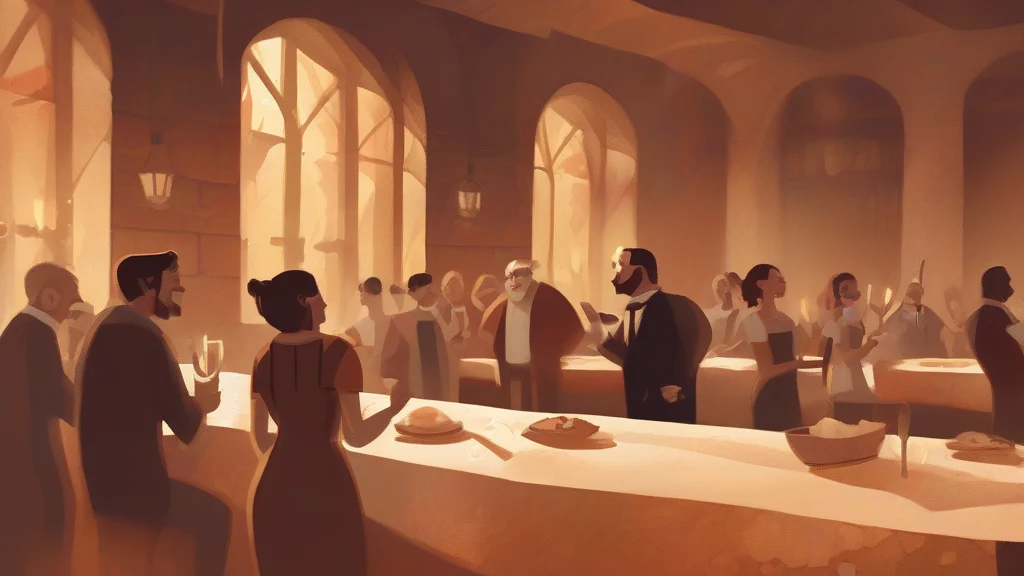
What does revelrous mean?
Revelrous is an adjective meaning full of merriment, delight, or exuberant celebration. It conveys a stronger and more animated sense of happiness than words such as “happy,” suggesting that joy is being expressed through laughter, movement, festivity, or communal celebration. The word is literary and uncommon, so it appears more often in formal prose, poetry, or descriptions of memorable occasions than in everyday conversation. It is especially suited to describing a crowd, atmosphere, spirit, occasion, or gathering that is lively with celebration. For example, a triumphant festival might be called revelrous, while a concert full of delighted participants might create a revelrous atmosphere. Though often associated with public festivities, the word can also apply more generally to an intensely joyful personal mood. Its distinctive character lies in combining happiness with a sense of festivity and exuberance.
adjectiveCharacterized by great delight, merriment, or celebration. It describes a joyful, exuberant mood, occasion, or gathering.
- Feeling or characterized by great merriment, delight, or exuberant celebration.
"The revelrous crowd gathered to celebrate the unexpected victory."
"The revelrous atmosphere continued through the night."
"Her revelrous laughter brightened the entire room."
Revelrous captures happiness so lively that it turns an occasion into a celebration.
Reviewed by Deb Chak, Editor. AI-assisted content curated by RJS Tech Solutions LLP.
Where does revelrous come from?
The word is formed from “revel,” meaning to celebrate with festivities, together with the suffix “-ous.” “Revel” comes through Middle French from Latin revelare, originally associated with uncovering or disclosing, and its English sense of festive celebration developed later. Related words include “reveal” and “revelation,” which retain the older sense of making something known.
Related word forms
How revelrous is actually used
This is a literary and relatively uncommon word. It is more expressive and elevated than ordinary words such as “happy” or “joyful,” and is often used for people, moods, gatherings, or occasions associated with celebration.