
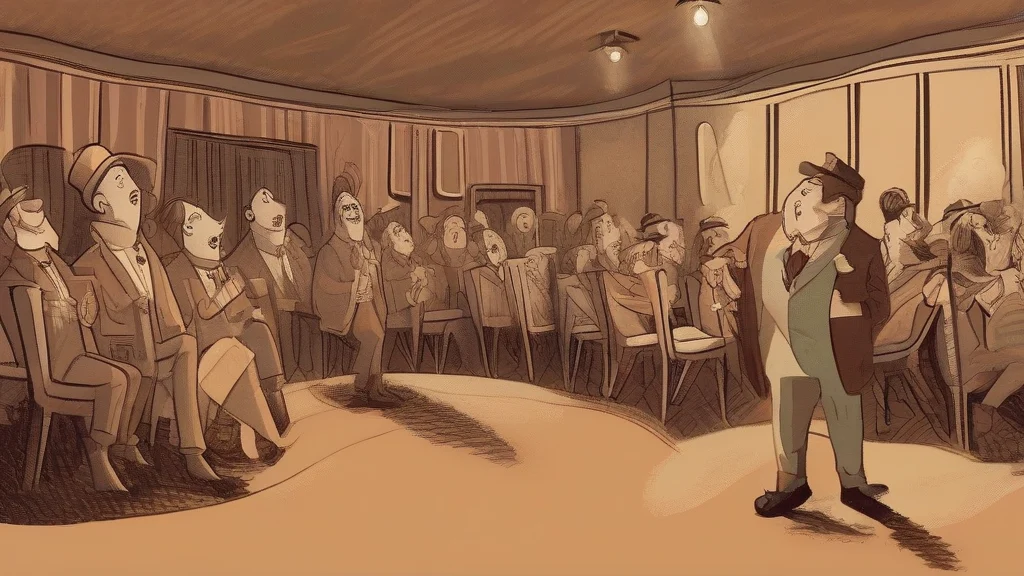
What does revue mean?
A revue is a form of theatrical entertainment that strings together sketches, songs, dances, impressions, and other short performances. Such productions often use comedy, satire, and topical references to create a lively evening of variety. The word may also denote a review or critical assessment, although this sense is less common in contemporary British and American English than the theatrical one. Revues have traditionally been associated with ambitious ensemble casts and frequently include celebrity performers, elaborate staging, and direct engagement with current events. Because its name derives from the French word for a review, the connection between examining or presenting material and taking in a varied show is an interesting reflection of the form's history. For readers, revue is therefore especially useful when distinguishing a lively stage production assembled from multiple short acts from an ordinary play with a single sustained plot.
A theatrical entertainment composed of sketches, songs, dances, impressions, and other short acts.
"The revue mixed political satire with songs from several decades of theatre."
The theatrical sense is dominant in modern British and American English.
A review or critical assessment, especially in contexts influenced by French usage.
"The journal published a brief revue of the exhibition."
The plural refers to individual theatrical productions or critical reviews.
"The festival has featured several provocative revues."
A revue puts the whole show on display: comedy, music, dance, satire, and spectacle in one glittering production.
Reviewed by Deb Chak, Editor. AI-assisted content curated by RJS Tech Solutions LLP.
Where does revue come from?
The English word comes from French revue, a form of the feminine past participle of revoir, meaning “to see again.” French revue originally referred to a review or inspection and later to a theatrical entertainment presenting a sequence of short acts. English borrowed the theatrical sense during the early 20th century, when revues became a prominent form of variety entertainment.
How revue is actually used
In modern English, revue most often refers to the theatrical form. Its meaning as a critical review is less common in British and US usage but remains understood.
Easily confused with revue
A revue is a live entertainment made up of short acts, whereas a review is ordinarily a written or broadcast evaluation of a work or event.