
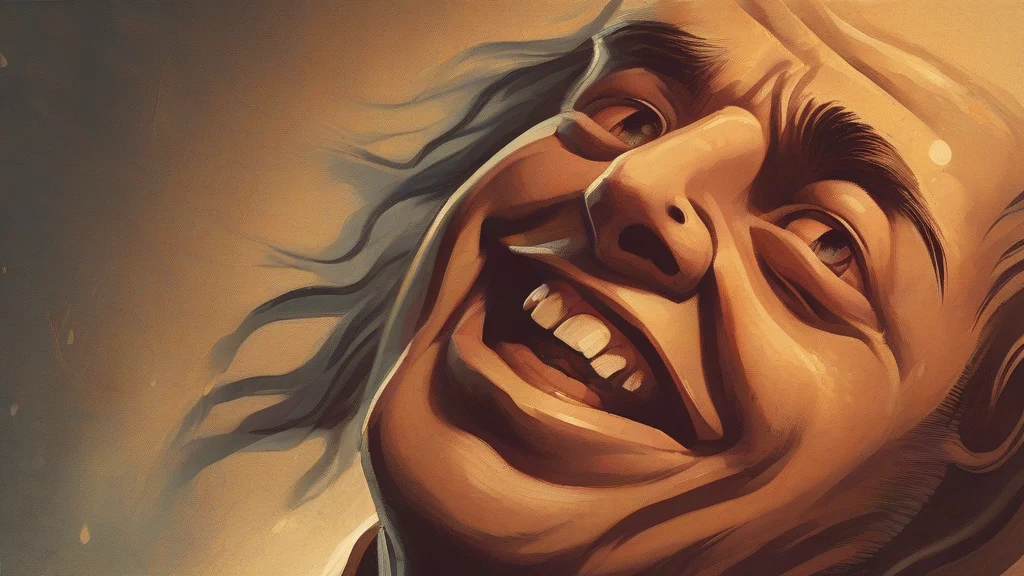
What does rictus mean?
A rictus is a marked grimace or involuntary contraction of the facial muscles. It commonly describes the brief distortion of the face that may accompany severe pain, fear, disgust, or intense emotion, although it can also refer to a more persistent muscular spasm. The word has a formal, literary, and medical tone, so it appears in clinical descriptions and carefully written narrative prose more often than in casual speech. In medical usage, rictus is especially associated with the abnormal facial expression called risus sardonicus, historically linked with tetanus. Because rictus emphasizes the physical movement or appearance of the face rather than the emotion behind it, it is especially effective when an author wants to focus on a visible, involuntary reaction. Its Latin derivation also makes it a useful word for discussing the history of anatomy and expressive movement.
nounA grimace or spasm of the facial muscles, especially one caused by pain, fear, or involuntary muscular contraction.
- A sudden grimace or contraction of the facial muscles, particularly one expressing pain, fear, or another strong emotion.
"A sudden rictus of pain crossed her face as the doctor touched the injured knee."
"The medication brought relief, though a faint rictus remained as the muscle spasms subsided."
"Her brief rictus of disbelief was quickly replaced by an embarrassed smile."
The regular plural adds -es; rictus is also encountered in the plural form rictus in some formal and medical writing.
"Tetanus may produce painful spasms and a sustained rictus known as risus sardonicus."
The word rictus evokes the involuntary face of someone in pain—and the medical term risus sardonicus describes the sustained, unnatural grin associated with tetanus.
Reviewed by Deb Chak, Editor. AI-assisted content curated by RJS Tech Solutions LLP.
Where does rictus come from?
Rictus entered English in the early 17th century from the Latin rictus, meaning “an open mouth” or “gaping.” The Latin word is the past participle of ringeri, “to open the mouth wide, gape,” and developed in English into a term for a convulsive grimace or facial spasm.
How rictus is actually used
This is a formal and literary word, encountered more often in descriptions of medicine, extreme emotion, or physical distress than in everyday conversation.