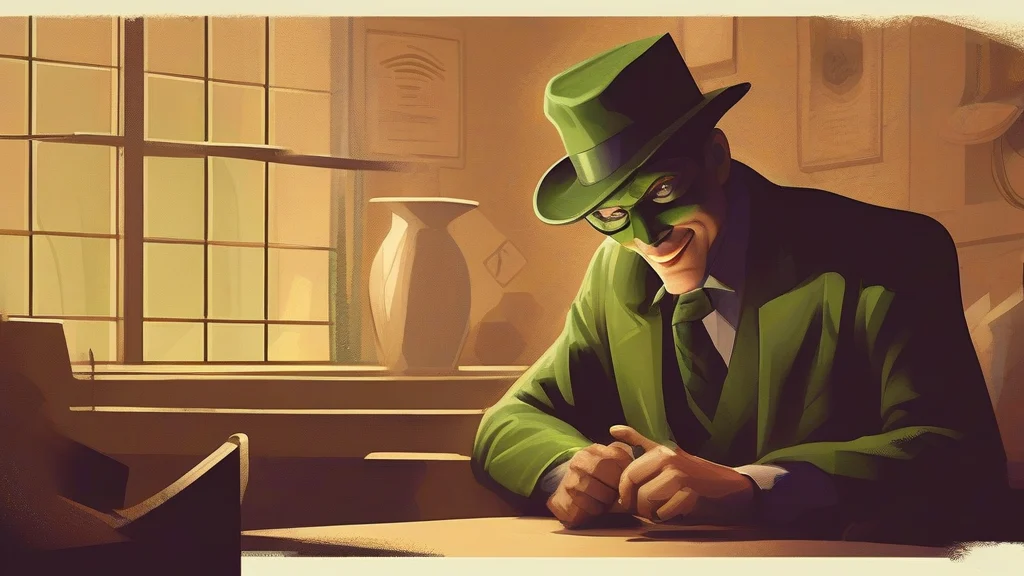
What does riddler mean?
A riddler is a person who creates, poses, or solves riddles, often for entertainment, intellectual challenge, or educational purposes. Riddlers may be found in social settings, such as parties or gatherings, where they engage others with clever puzzles and brain teasers. The term is often associated with cleverness, creativity, and intellectual playfulness. Riddlers may also be involved in competitive puzzle-solving or cryptography. The art of riddling has a long history, with roots in ancient cultures and oral traditions. Overall, the riddler is a figure who brings people together through the shared enjoyment of intellectual challenges and puzzles.
nounA person who creates or poses riddles, often for entertainment or intellectual challenge.
- A person who creates riddles
- A person who solves riddles
"The riddler at the party kept everyone engaged with clever puzzles and brain teasers."
"The riddler's clever clues kept the detectives busy for hours."
"She was known as a master riddler, able to solve even the most complex puzzles."
The plural form 'riddlers' is used to refer to multiple individuals who create or solve riddles.
"The group of riddlers gathered to share and solve puzzles."
Reviewed by Deb Chak, Editor. AI-assisted content curated by RJS Tech Solutions LLP.
Etymology of riddler
The word 'riddler' is derived from the noun 'riddle', which refers to a statement or question that requires thought and contemplation to decipher its meaning. The term 'riddle' has its roots in Old English and Germanic languages, with cognates in modern languages such as Dutch and German. The verb 'to riddle' means to puzzle or perplex, and the noun 'riddler' refers to a person who engages in this activity.
How riddler is actually used
The term 'riddler' often carries a positive connotation, suggesting cleverness and intellectual playfulness.