
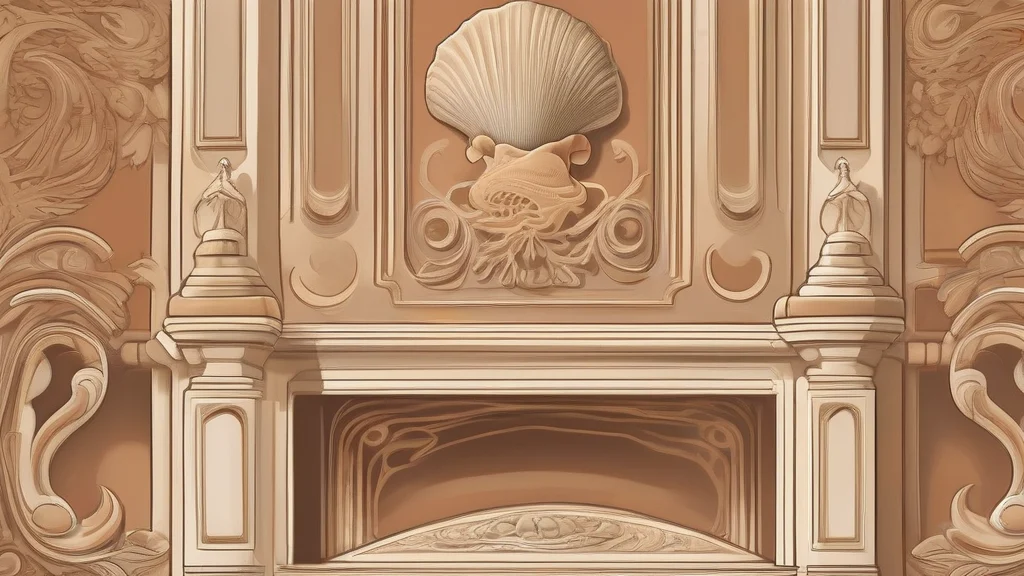
What does rocaille mean?
Rocaille is ornamental work that imitates the appearance of natural rock. It is traditionally produced by arranging small stones, pebbles, shells, or similar fragments into grotto-like formations, often within walls, fountains, gardens, or decorative objects. The word may refer either to the physical decoration itself or to the broader decorative style characterized by irregular, rock-like forms. Rocaille became especially associated with European ornamental design during the eighteenth century and is frequently encountered in descriptions of grottoes, fountains, garden features, and richly decorated interiors. Although the vocabulary of rococo design includes rocaille, the two terms are not interchangeable: rococo describes an entire artistic movement, while rocaille identifies a particular technique and kind of ornament. Today, the word is mainly used by architectural historians, conservators, and writers discussing historic or decorative design rather than in ordinary conversation.
nounDecorative work that imitates natural rock formations, traditionally made with small stones, pebbles, shells, or similar fragments. The term can also refer to this rock-like ornament or the style in which it is used.
- Ornamental work imitating natural rock formations, traditionally made with small stones, pebbles, shells, or other fragments.
- A rock-like decorative style used in architecture, interiors, gardens, grottoes, and ornamental objects.
"The grotto's rocaille, made from pebbles and shells, gives the interior the appearance of a natural cave."
"In the garden pavilion, rocaille of shells and pebbles creates the illusion of a rocky cavern."
"The cabinetmaker filled the panel with delicate rocaille, transforming its surface into a miniature landscape."
The plural is uncommon and is used mainly when referring to several separate decorative works or installations.
"Several rocailles survive in the palace gardens."
Rocaille turns humble pebbles and shells into architecture's most convincing imitation of a wild cave.
Reviewed by Deb Chak, Editor. AI-assisted content curated by RJS Tech Solutions LLP.
Where does rocaille come from?
English borrowed the word from French rocaille, originally a term for small stones or pebbles. French rocaille developed from rocailler, meaning to cover or ornament with pebbles, from rocher, “rock.” Its English decorative sense developed with the European fashion for grottoes and imitation rockwork, especially during the eighteenth century.
How rocaille is actually used
This is a specialist term in architecture and the decorative arts. It has an old-world, ornamental register and is more common in heritage and design writing than in everyday speech.
Easily confused with rocaille
Rocaille is a specific form of pebble- or shell-based ornament imitating rock, whereas rococo denotes a much broader eighteenth-century artistic style.