
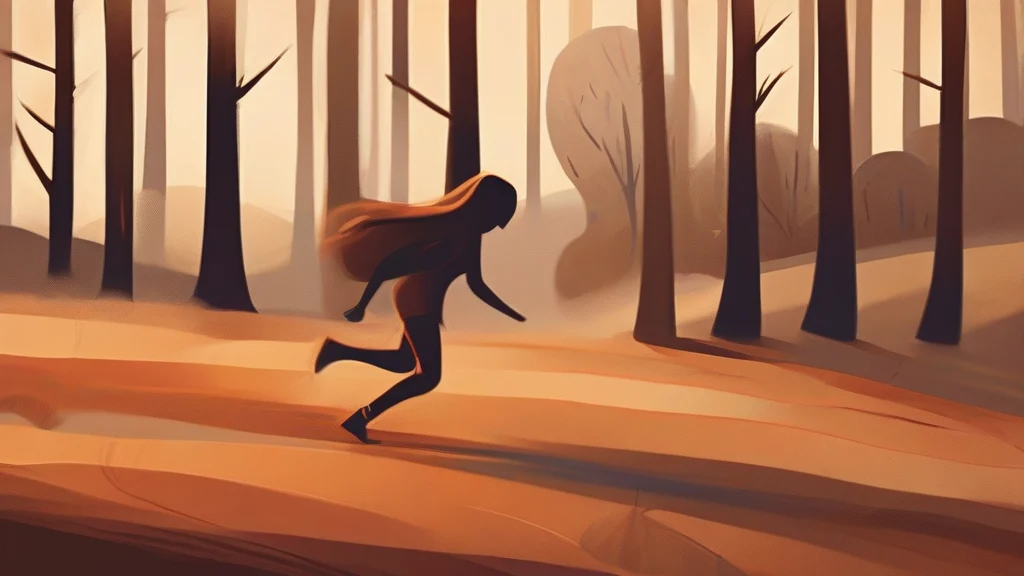
What does romping mean?
Romping means playing or behaving with lively, uninhibited energy. The word is commonly used for children or animals moving, jumping, and playing noisily, as in a description of puppies romping in a garden, but it can also apply to festive or exuberant activity among adults. It carries a cheerful, informal, and often nostalgic tone, suggesting play without serious purpose. Romping is the present participle of romp, and the related noun romper traditionally refers to a child's one-piece garment associated with active play. The expression can be used figuratively for energetic movement or behavior, although its everyday use is usually physical and playful.
verbTo play or behave in a lively, noisy, and uninhibited way. It is the present participle of the verb romp.
- To play or move about vigorously and joyfully.
"The children spent the afternoon romping in the meadow."
"The puppies were romping around the living room."
"Her account of the festival was full of stories about dancing and romping until midnight."
Romping is play with enough energy to sound like an event.
Reviewed by Deb Chak, Editor. AI-assisted content curated by RJS Tech Solutions LLP.
Where does romping come from?
Romping is the English present-participle form of romp. The verb has circulated in English since the 19th century in the sense of engaging in vigorous, noisy, or boisterous play. Its precise deeper origin is uncertain, so it is safer to treat it as an English verb without assigning it confidently to a particular foreign source.
Related word forms
How romping is actually used
Romping is generally lighthearted and often informal. It is especially used for children, animals, or groups behaving playfully, but can also describe energetic activity more generally.
Easily confused with romping
Roaming means travelling or moving about, often without a fixed destination, whereas romping usually implies vigorous, playful activity.