
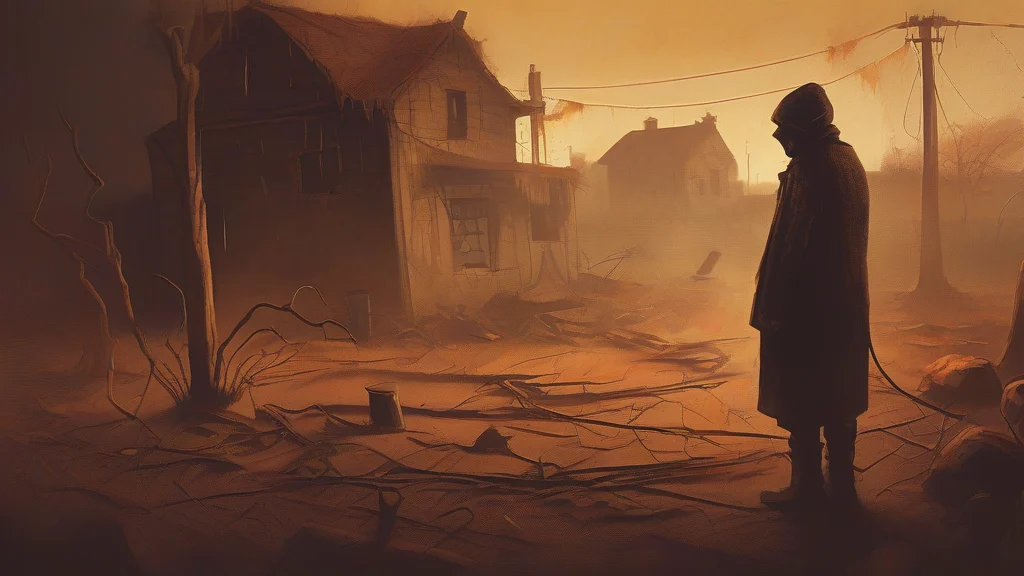
What does rottenness mean?
Rottenness is the noun corresponding to the adjective rotten and most commonly denotes the condition of being physically decayed or decomposing. It can describe spoiled food, decaying material, or the smell and appearance associated with decomposition. Figuratively, rottenness describes deep moral corruption, institutional failure, or the deterioration of principles and practices. For example, a critic may describe a political organization as tainted by rottenness when its leadership and procedures appear corrupt or fundamentally unsound. The word is strongly evaluative rather than neutral: unlike decay, which can describe either physical change or gradual decline, rottenness almost always conveys serious decay and often disgust. It is particularly useful when discussing corruption that has spread through a person, organization, or wider system.
nounThe state or quality of being rotten, especially decay caused by decomposition. Figuratively, it refers to moral corruption, deterioration, or deep decay.
- The state or quality of being rotten, especially through physical decay or decomposition.
- Moral corruption, degradation, or decay in an institution, organization, or society.
"The investigation exposed the rottenness at the heart of the organization."
"The smell of rottenness spread through the abandoned building."
"Her speech exposed the rottenness of the regime's claims to uphold justice."
The plural is grammatically regular but rarely used.
"The novel portrays the political rottennesses of the period."
A word can be full of sound ideas and still stink of corruption: that distinction is rottenness.
Reviewed by Deb Chak, Editor. AI-assisted content curated by RJS Tech Solutions LLP.
Where does rottenness come from?
Rottenness was formed in English by adding the suffix -ness to rotten. The suffix ultimately comes from Old English -nes, a grammatical ending used to form abstract nouns, while rotten developed within the Germanic vocabulary associated with decay and putrefaction. The word is therefore a transparent English formation meaning roughly 'the state or quality of being rotten,' and it has close connections with rot and its family.
Related word forms
How rottenness is actually used
Literal uses emphasize decay or decomposition; figurative uses are strongly critical and often describe corruption in institutions, governments, or social systems. The word is more formal and evaluative than decay and generally carries a much stronger negative judgment.
Easily confused with rottenness
Rot usually names the process or substance of decay, whereas rottenness names the state or quality of being decayed.