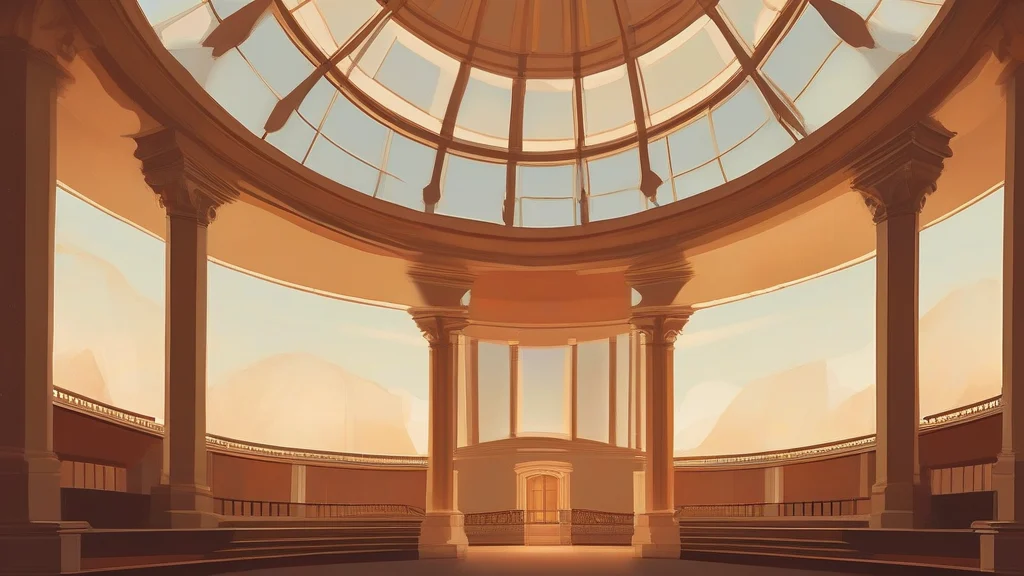
What does rotunda mean?
A rotunda is a building or structure with a circular or polygonal shape, typically with a dome or vaulted ceiling. The term is often used in architecture to describe a building with a central dome or vaulted ceiling. Rotundas can be found in various forms, from ancient temples to modern museums and galleries. They are often used for public or ceremonial purposes, and can be found in many different cultures and historical periods. The rotunda is a versatile and iconic architectural form that continues to inspire and influence modern design.
nounA building or structure with a circular or polygonal shape, typically with a dome or vaulted ceiling, often used for public or ceremonial purposes.
- A building or structure with a circular or polygonal shape
"The rotunda of the Capitol Building in Washington, D.C. is a grand example of neoclassical architecture."
"The Pantheon in Rome is a famous example of a rotunda."
"The National Gallery of Art in Washington, D.C. has a rotunda that hosts temporary exhibitions."
The plural form 'rotundas' is used to describe multiple buildings or structures with a circular or polygonal shape.
"The city has several rotundas that host cultural events and exhibitions."
Reviewed by Deb Chak, Editor. AI-assisted content curated by RJS Tech Solutions LLP.
Etymology of rotunda
The word 'rotunda' comes from the Latin 'rotundus', meaning 'round' or 'circular'. The term was adopted into French as 'rotonde' and Italian as 'rotonda', and has since been used in English to describe a building or structure with a circular or polygonal shape.
How rotunda is actually used
In architecture, a rotunda is often used to describe a building with a central dome or vaulted ceiling. The term can also refer to a circular or polygonal structure used for public or ceremonial purposes.