
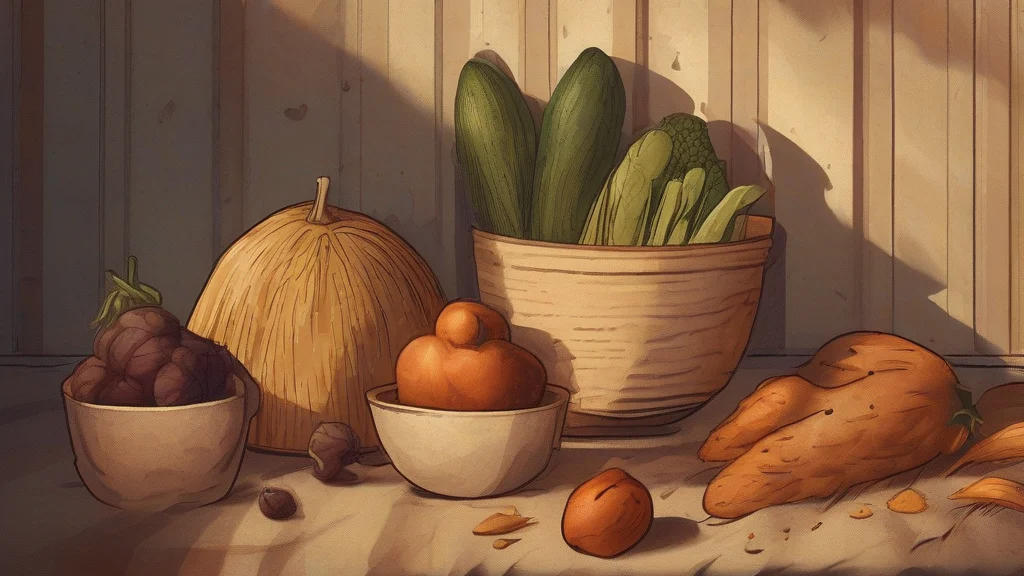
What does roughage mean?
Roughage means coarse, fibrous material, most commonly the indigestible fiber found in fruits, vegetables, whole grains, and legumes. In nutritional contexts, it refers to the portion of food that is not fully broken down by digestive enzymes and that contributes to the bulk and movement of food through the digestive tract. The word also has a more general meaning: rough, coarse, or unrefined material. Its use is especially associated with formal descriptions of diet and nutrition, while the broader sense is more literary or technical. Roughage is useful for distinguishing dietary fiber from substances that are immediately digested, and it can also describe materials whose deliberately coarse or uneven texture is important.
nounRoughage is coarse, fibrous material, especially the indigestible fiber of fruits, vegetables, and grains. The term can also refer more generally to rough or unrefined material.
- Coarse or fibrous material, especially the indigestible parts of food.
- Any rough, unrefined, or coarse material.
"The diet includes plenty of roughage from whole grains, legumes, and vegetables."
"Whole grains provide roughage that supports healthy digestion."
"The building was made from roughage, giving the walls a coarse, uneven texture."
The plural is rare and is usually needed only when referring to different kinds of roughage or rough materials.
"The study compared several roughages used in animal feed."
Roughage is the part of food that does not dissolve: the fibrous material that helps food move through the digestive system.
Reviewed by Deb Chak, Editor. AI-assisted content curated by RJS Tech Solutions LLP.
Where does roughage come from?
The word is an English formation from rough and the suffix -age, developed in the 19th century to denote coarse or fibrous material. Its underlying root is also the source of related forms such as roughness and roughen. The compound-like formation reflects the older use of rough for something coarse, uneven, or resistant to smoothing.
How roughage is actually used
In nutrition, the term is chiefly formal or technical and refers to dietary fiber. In general use, it can denote rough or coarse material, though this broader sense is less common.