
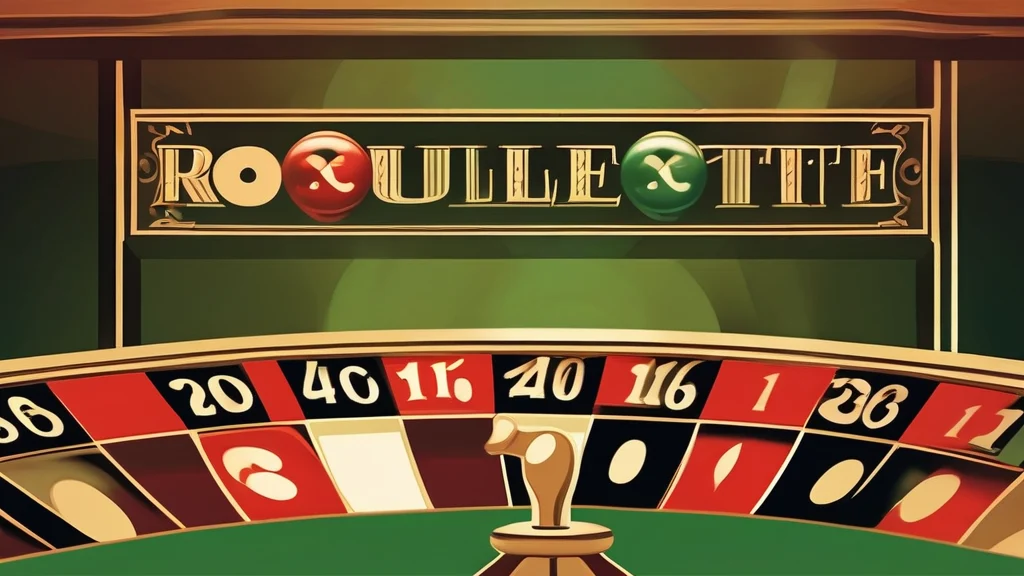
What does roulette mean?
Roulette is chiefly a gambling game in which players wager on the numbered pockets into which a ball falls after a wheel is spun. The game is strongly associated with casinos, chance, risk, and suspense, and its name can also stand for any decision whose outcome depends on unpredictable circumstances. In figurative expressions, a choice may be described as roulette when there is no reliable way to know which option will produce the best result. The related verb, “to roulette,” means to select or arrange something by chance, though it is less common than the noun. Although roulette is played internationally, its terminology and cultural imagery are particularly associated with European and American casinos. Its enduring appeal lies in the combination of simple mechanics and uncertain outcomes: a small ball and a rotating wheel can determine fortunes in a matter of seconds.
A gambling game played with a numbered wheel and a ball, in which wagers are placed on the numbered or color-coded pockets where the ball comes to rest.
"They spent the evening playing roulette in the casino."
The word commonly carries associations with gambling, risk, and suspense.
An outcome, choice, or situation determined by chance rather than certainty, calculation, or control.
"Choosing between the two proposals was a game of roulette."
This figurative sense is often used when several outcomes are possible and none can be predicted with confidence.
To choose or determine something by chance, especially by using a random or unpredictable process.
"The organizers rouletted the order in which the performers would appear."
This verb is relatively uncommon and often has an informal or figurative flavor.
The plural is used for individual games, wheels, or instances of the gambling game.
"The casino offered several tables of roulette."
Roulette turns a simple spinning wheel into one of the most iconic symbols of luck, risk, and suspense.
Reviewed by Deb Chak, Editor. AI-assisted content curated by RJS Tech Solutions LLP.
Where does roulette come from?
The word entered English from French roulette, a diminutive of roue, meaning “wheel,” formed with the suffix -ette. In French, roulette also refers to the small wheel used in the gambling game. The French word ultimately derives from Latin rota, meaning “wheel,” which is also the source of English words such as rotate, rotation, and rotary.
Related word forms
How roulette is actually used
The noun is strongly associated with gambling and may imply both excitement and danger. In figurative use, it suggests an outcome determined by chance rather than skill or deliberate planning. The verb is less common and is usually informal or figurative.