
What does rudder mean?
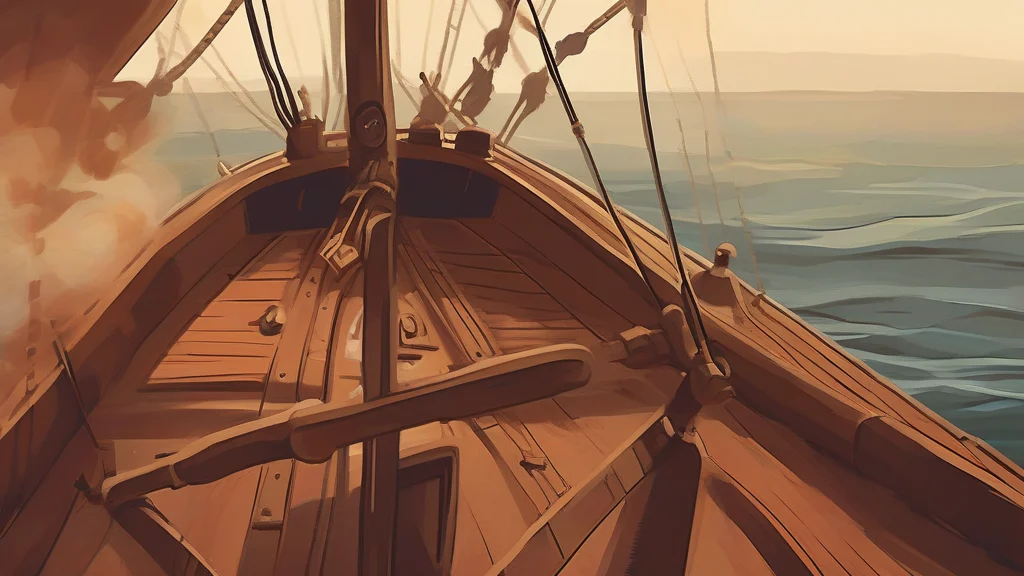
A rudder is the steering device found at the back of a boat, ship, or other vessel. It is typically a hinged blade that turns in the water, allowing a helmsman to alter the vessel’s course. The word is also used for comparable steering devices in aircraft, submarines, and other machines, and figuratively for anything that provides direction or control. “Rudder” can suggest both precise guidance and the responsibility involved in managing a course: a crew member may “take the helm,” while a leader may be said to “hand over the rudder.” The term is common in transport and technical writing, but it also has a familiar metaphorical use in politics, business, and everyday conversation. Its importance is practical: without a functioning rudder, many watercraft cannot be controlled effectively, so inspections and maintenance of the rudder, its linkages, and its controls are essential safety procedures.
A hinged blade or fin at the rear of a boat or vessel, used to steer by changing the direction of water flowing past the hull.
"The crew repaired the broken rudder before the ship left the harbor."
The nautical sense is the most common. The word may also refer to analogous steering devices in aircraft and other vehicles.
A device or mechanism that controls the direction, orientation, or movement of a vehicle, craft, or system.
"The aircraft’s rudder responded slowly during the hover test."
This is a technical extension of the nautical sense and is especially common in aviation and engineering.
The plural is used when referring to multiple steering devices or to the component on more than one vessel.
"The engineers inspected the rudders on both survey vessels."
A rudder may look simple, but it controls a vessel’s direction by acting against the surrounding water—a basic principle also used in aircraft, submarines, and hovering craft.
Reviewed by Deb Chak, Editor. AI-assisted content curated by RJS Tech Solutions LLP.
Etymology of rudder
The English word came through Middle English from a Germanic root associated with steering or the rear of a vessel. Modern cognates include German Ruder, Dutch roer, and Swedish roder, reflecting a wider Germanic vocabulary for steering devices. The word has long been used in nautical and transport contexts, and its later figurative sense developed from the idea of a vessel being directed by its rudder.
How rudder is actually used
The term is standard in maritime, aviation, and engineering contexts. In figurative use, “hand over the rudder” means to assume control or responsibility for direction, while “rudder controls” can refer metaphorically to systems that manage an organization or operation.