
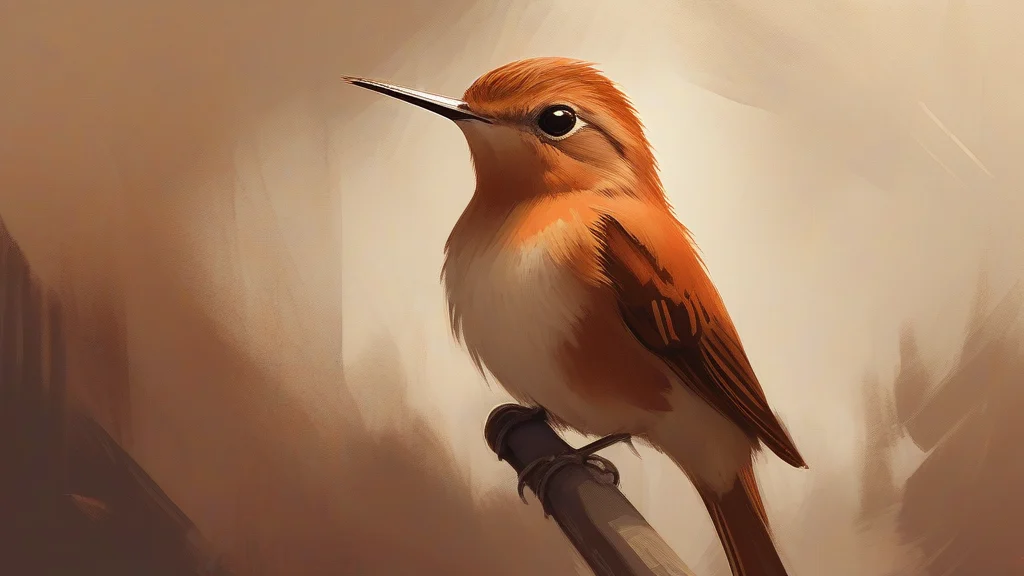
What does rufous mean?
“Rufous” describes a warm, reddish-brown color, the sort of tawny-red shade associated with autumn leaves, reddish soil, animal fur, and bird plumage. It is particularly common in ornithological and zoological descriptions, where it distinguishes birds with rusty, coppery, or chestnut-colored feathers. In ordinary writing, “reddish-brown” or “tawny” may be more immediately familiar, but “rufous” offers a concise and evocative alternative. The word often suggests a natural, earthy richness rather than a bright or artificial red. It can also function as a noun naming the color itself, as in a painter selecting a rich rufous for the background. First used in English in the early 17th century, it comes through Latin from a term associated with red hair or a ruddy complexion. Its precision and slightly literary tone make it especially useful when describing coloration that is more than merely brown but less vivid than scarlet.
Having a warm reddish-brown or tawny-red color.
"The owl's rufous feathers blended with the reddish bark of the cedar."
Especially frequent in ornithological and zoological description.
A warm reddish-brown color, especially one resembling the plumage or fur of animals.
"The designer paired deep rufous with muted green and gold."
The noun is usually treated as a color name and is rarely pluralized.
Rare; the noun is normally used as an uncountable color name.
"The archive catalog identifies two separate rufouses among the mineral pigments."
From Latin for “red-haired” to the fiery flash of a hummingbird, rufous is nature's warm color in motion.
Reviewed by Deb Chak, Editor. AI-assisted content curated by RJS Tech Solutions LLP.
Where does rufous come from?
English borrowed “rufous” in the early 17th century from Latin rufus, meaning “red-haired” or “ruddy.” Latin rufus belongs to a wider family of words connected with red, including ruber, “red,” from which forms such as rubric and rubicund developed. The same broad red root also underlies cognates including “ruby,” while the English color term became especially prominent in descriptions of birds and other animals.
How rufous is actually used
The word is especially common in ornithology, zoology, and descriptive natural-history writing. In general prose, “reddish-brown” or “tawny” may sound more familiar, while “rufous” gives the description a more technical or literary tone.
Easily confused with rufous
Rufous denotes a warm reddish-brown color, whereas russet is a closely related but often more orange-brown color and may also refer to a reddish-brown fabric or pigment.