
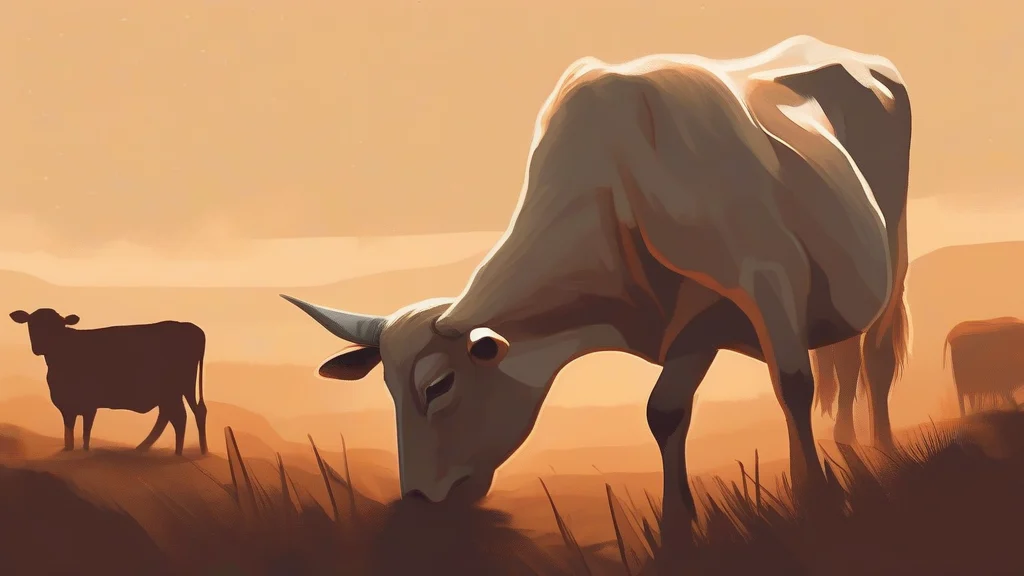
What does ruminant mean?
A ruminant is a hoofed mammal that chews cud: food is partly digested in the stomach, returned to the mouth, and rechewed before digestion continues. This process helps animals obtain nutrients from fibrous vegetation such as grass and leaves. Cattle, sheep, goats, deer, and related animals are familiar ruminants. The word can also be used figuratively of a person who reflects deeply or considers an issue at length, although that usage has a more literary and formal tone. As an adjective, ruminant can describe the animals themselves, their digestive systems, or characteristics associated with them. The term is useful in biology, agriculture, veterinary science, and food production, where the distinctive digestive process of these animals is important. In general speech, “cud-chewing animal” is understandable, but “ruminant” is the precise scientific and agricultural term.
A hoofed mammal that chews cud, including cattle, sheep, goats, and deer.
"The herd of ruminants moved toward the shelter as evening approached."
In figurative use, the word can refer to a person who reflects deeply, but this sense is formal and literary.
Relating to or characteristic of ruminants or their digestive process.
"Ruminant digestion allows cattle to obtain nutrients from coarse grass."
This is the standard adjective use in biological, agricultural, and veterinary contexts.
The regular plural is used for multiple animals and, in figurative use, for multiple people who reflect deeply.
"These ruminants are adapted to survive in dry, mountainous environments."
A ruminant’s meal may spend more time being regurgitated and rechewed than being swallowed the first time around.
Reviewed by Deb Chak, Editor. AI-assisted content curated by RJS Tech Solutions LLP.
Where does ruminant come from?
Ruminant comes through Latin from roots associated with rumen, meaning “belly,” and ruminari, meaning “to chew cud.” The word entered English in the early modern period and was initially associated with animals that chew cud. English ruminate, rumination, and ruminative belong to the same Latin family, developing meanings connected both with chewing cud and with turning thoughts over repeatedly.
How ruminant is actually used
The noun is most common in biology, agriculture, and discussions of animal digestion. The figurative noun and adjective uses are formal and literary rather than everyday.
Easily confused with ruminant
A ruminant is an animal that chews cud, whereas rumination is the act of chewing cud or, figuratively, thinking something over.
Ruminant is chiefly a noun or adjective for a cud-chewing animal, while ruminate is a verb meaning to chew cud or consider something thoughtfully.