
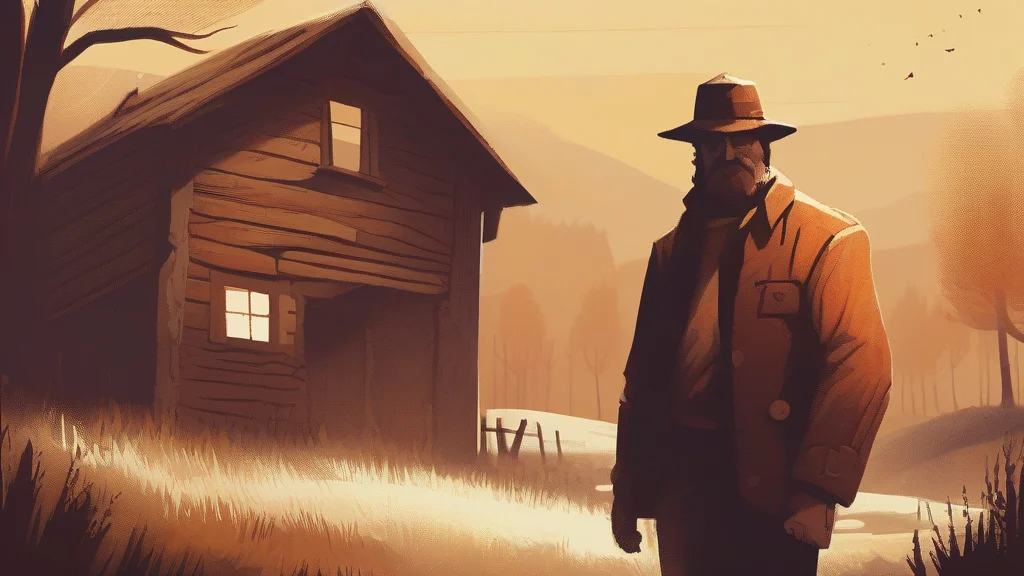
What does rusticator mean?
A rusticator is a rare agent noun built on the familiar verb rusticate. In its clearest use, it denotes someone who gives an object, building, or design a deliberately rustic quality—that is, an appearance associated with the countryside, rough materials, or weathered surfaces. The word can also extend, by contrast with the verb, to someone who lives or spends time in the country, though the form is not common in ordinary speech. Most speakers would express either idea more directly with rusticate or a more familiar phrase such as make something rustic or live in the countryside. Rusticator is therefore chiefly of interest as a precise and somewhat old-fashioned agent noun rather than as everyday vocabulary. Its Latin ancestry clarifies the pattern: it was formed from the same root as rustic and rusticate, combining the idea of country life with the Latin agent-forming suffix -ator.
nounA rare noun meaning one who rusticates, especially a person who makes something look rustic through rough materials, weathered textures, or an intentionally rural appearance.
- One who rusticates, especially a person who gives an object or building a deliberately rustic appearance through rough materials or weathered textures.
- A person who lives or spends time in the countryside, especially as someone temporarily or deliberately removed from urban life.
"The architect employed a rusticator to give the new building an earthy, timeworn character."
"The designer called on an experienced rusticator to weather the surface of the new stone façade."
"After a summer on the isolated farm, he returned from the north more of a rusticator than before."
The regular plural is used when referring to more than one person who rusticates.
"The two rusticators gave the abandoned building a convincing appearance of long-neglected age."
Rusticator turns the act of rusticate into a character: someone who roughens the façade—or embraces country life.
Reviewed by Deb Chak, Editor. AI-assisted content curated by RJS Tech Solutions LLP.
Where does rusticator come from?
Rusticator comes from Latin rusticātor, an agent noun meaning “one who makes rustic” or “ruralizer.” It is built on rusticus, “of the countryside, rural,” from rūs, “countryside,” together with the agent suffix -ātor. English borrowed related forms such as rustic and rusticate; these preserve the same semantic link between rural character and an act of making or becoming rustic.
How rusticator is actually used
A rare and somewhat literary word. It is much less usual than rusticate; in ordinary usage, make rustic or live in the countryside may be clearer and more natural.
Easily confused with rusticator
Rusticator is a rare noun for someone who makes or lives something rustic, while rustic is principally an adjective describing rural, natural, or deliberately rough features.
Rusticator is the agent noun, whereas rusticate is the verb meaning to make something rustic or to live in the countryside.