
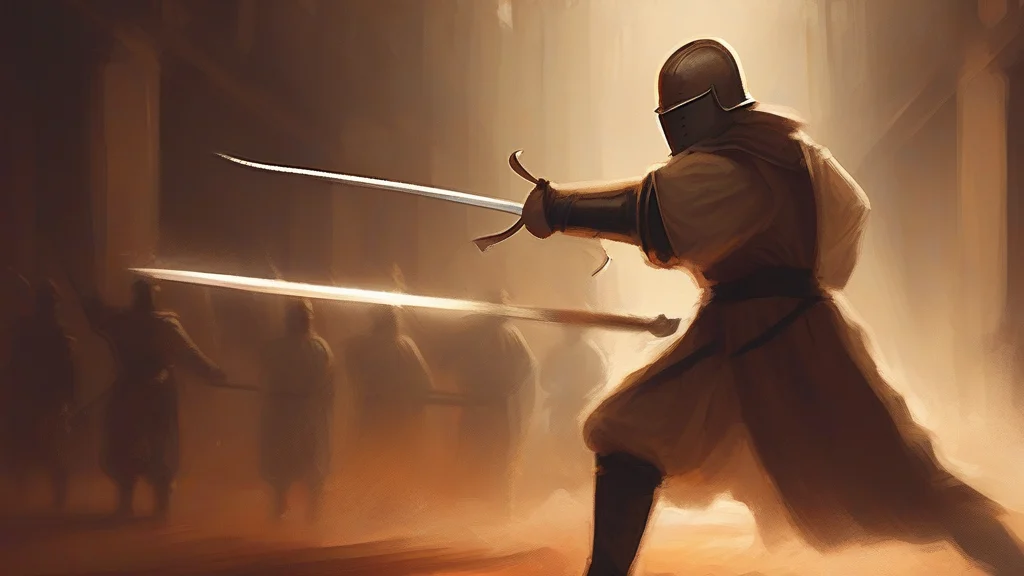
What does sabering mean?
Sabering is a verb meaning to cut, slash, or wield with a saber, a curved sword especially associated with cavalry and formal swordsmanship. In literary and historical writing, it evokes the decisive sweeping motion of a military blade rather than merely the general act of cutting. The word is chiefly American: British English generally uses the form sabring, based on sabre, while saber is the usual American spelling. Sabering can describe both striking with a sword and cutting through an obstacle, such as a rope or barrier. Its connotations are dramatic and martial, making it more evocative than a neutral verb such as cutting. The form belongs to the same word family as saber, sabre, and related terms connected with swordsmanship, including the French sabreur, a fencer or swordsman. Although not everyday vocabulary, sabering is useful in descriptions of battle, fencing, historical fiction, and other contexts where a vivid period or military flavor is intended.
verbSabering means to cut or slash with a saber, or to wield a saber in a cutting stroke. It is chiefly used in literary, historical, and military contexts.
- To cut or slash with a saber.
- To wield a saber with a cutting stroke, especially in fencing or combat.
"The cavalryman sabered the rope cleanly in two."
"He sabered the rope cleanly in two."
"In the film, the swordsman sabered through the guards."
Sabering turns the saber from a weapon into an action, recalling the sweeping sword strokes of cavalry combat.
Reviewed by Deb Chak, Editor. AI-assisted content curated by RJS Tech Solutions LLP.
Where does sabering come from?
Sabering is an English gerund formed from saber with the -ing ending. Saber is the American spelling of sabre, which entered English through French and Spanish forms associated with a sword, especially a cavalry saber. The related English noun saber and the French sabreur, meaning a swordsman or fencer, preserve the same martial vocabulary.
Related word forms
How sabering is actually used
The word is literary and somewhat old-fashioned. Its association with military combat and swordsmanship gives it a dramatic, historical tone; British English more often uses sabring.
Easily confused with sabering
Sabering uses the American spelling saber, whereas sabring uses the British spelling sabre; both forms can mean cutting or wielding a sword with a saber.