
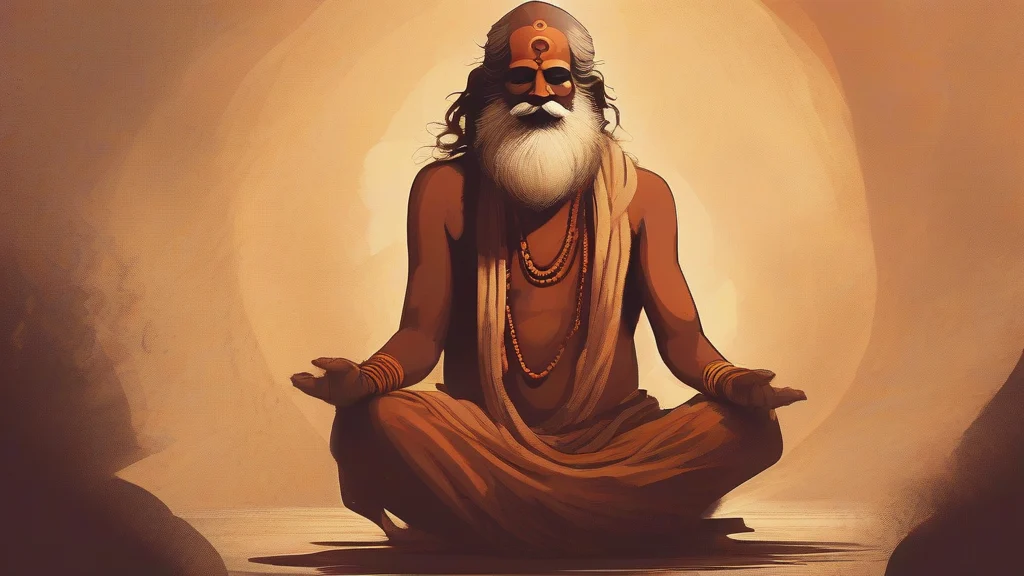
What does sadhu mean?
A sadhu is a Hindu ascetic or holy man, especially one who has given up ordinary social life to pursue spiritual discipline. The term commonly evokes renunciation, meditation, religious devotion, self-discipline, and a life oriented toward spiritual goals rather than material concerns. It may refer specifically to a practitioner of ascetic traditions associated with Hinduism, as well as to a wandering mendicant or teacher. In some English contexts, “sadhu” is also used as an honorific for someone regarded as morally upright or saintly, though this broader use is less formal and more literary than the religious sense. The word is especially associated with South Asian religious and cultural settings, but appears in English writing about yoga, Hinduism, pilgrimage, meditation, and Indian traditions. Its respectful and somewhat idealized associations make it more specific than the general terms “ascetic” or “holy man.”
A Hindu ascetic or holy man, especially one who has renounced worldly life in order to pursue spiritual discipline.
"The sadhu spent several years practicing meditation in the forest."
Most often used in South Asian religious, cultural, or literary contexts.
An honorific for a person regarded as morally upright, spiritually disciplined, or saintly.
"The village elders respected him as a sadhu whose wisdom was sought by many."
This extended sense is relatively uncommon and often literary rather than ordinary everyday usage.
The standard plural is “sadhus”; in religious and cultural contexts, it is often pronounced with the final syllable clearly stressed.
"Several sadhus traveled together along the pilgrimage route."
The word sadhu comes from Sanskrit for a person devoted to spiritual practice, but its modern use can also convey a broader sense of moral dignity.
Reviewed by Deb Chak, Editor. AI-assisted content curated by RJS Tech Solutions LLP.
Etymology of sadhu
The English word was borrowed from Sanskrit साधु (sādhu), meaning a virtuous or holy person and especially an ascetic or renunciant. Its religious meaning developed from the Sanskrit vocabulary of religious discipline and the renunciation of worldly attachments. The term has long been used in English accounts of Hindu religious practice, where it designates a person devoted to spiritual discipline.
How sadhu is actually used
In contemporary English, the word most often appears in South Asian cultural, religious, or literary contexts. It is sometimes used more broadly as a respectful title for a morally upright person, though that extension can sound literary or informal rather than everyday.
Easily confused with sadhu
A sadhu is a male Hindu ascetic or holy man, whereas a sati refers traditionally to a widow who undergoes self-immolation on her husband's funeral pyre.
A sadhu is a Hindu ascetic or holy man, while a swami is a Hindu monk or religious teacher.