
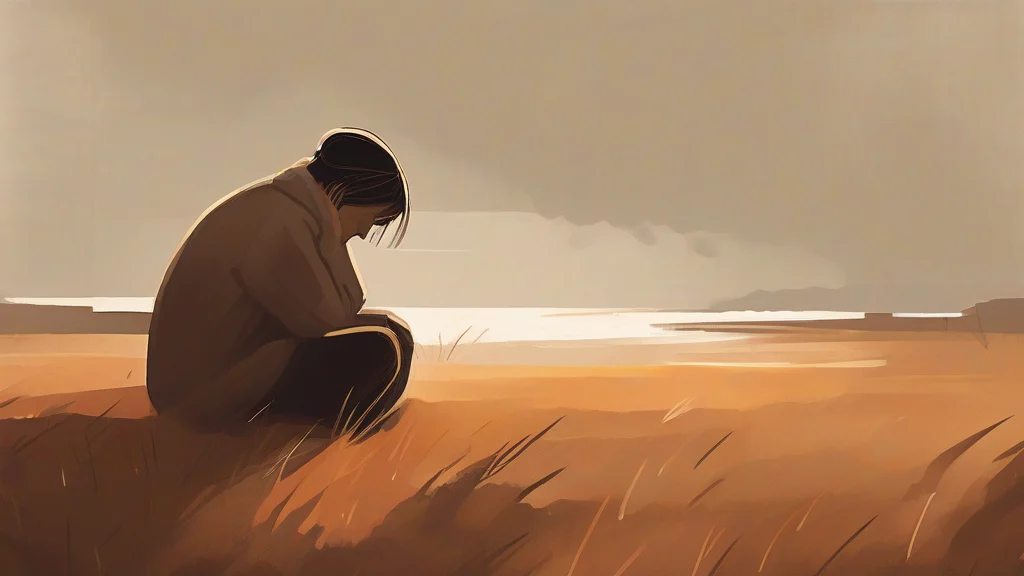
What does sadness mean?
Sadness names the condition of being sad, including the feelings of sorrow, grief, unhappiness, or emotional hurt that may accompany loss, disappointment, or difficult circumstances. It can describe a person’s inner state, as in “a deep sense of sadness,” or the atmosphere of a place, story, or event. Unlike a brief feeling of unhappiness, sadness often suggests a more substantial or lingering emotional condition, though the two words overlap considerably. In literary and artistic contexts, sadness may also indicate a reflective, subdued, or melancholy quality rather than outright despair. The word is widely understood and has a neutral tone, making it suitable for formal and informal description. It is also the noun formed from “sad” and links to related words such as “sadden,” describing the act of making someone or something sad.
nounThe state or condition of being sad, especially as a feeling of sorrow, grief, or unhappiness. It can also refer to a broadly gloomy or melancholy quality.
- The state or condition of being sad, especially as a feeling of sorrow, grief, or unhappiness.
- A broadly gloomy, melancholic, or dispiriting quality, as in a place or situation imbued with sadness.
"A quiet sadness settled over the room after the announcement."
"She spoke with a mixture of relief and sadness as the train pulled away."
"The old house was beautiful, but there was a palpable sadness in its empty rooms."
Rare in ordinary usage; the word is normally used in the singular or as an uncountable noun.
"The novel explores different forms of sadnesses that follow people through life."
The word sadness captures more than a single unhappy moment: it suggests a mood that can color the whole world around a person.
Reviewed by Deb Chak, Editor. AI-assisted content curated by RJS Tech Solutions LLP.
Where does sadness come from?
“Sadness” was formed in English by adding the suffix “-ness” to “sad.” “Sad” descends from Old English “sæd,” although the precise origin of that Old English word is uncertain. The suffix “-ness” is an English formation that creates abstract nouns denoting states, qualities, or conditions.
Related word forms
How sadness is actually used
Sadness is neutral in register and is commonly used for both personal emotion and the atmosphere of a place, event, or work of art. In literary contexts, it can carry a sustained or reflective quality.
Easily confused with sadness
Sadness is the general state of feeling sad, while sorrow often emphasizes a deep or prolonged distress, especially following a loss.