
What does sage mean?
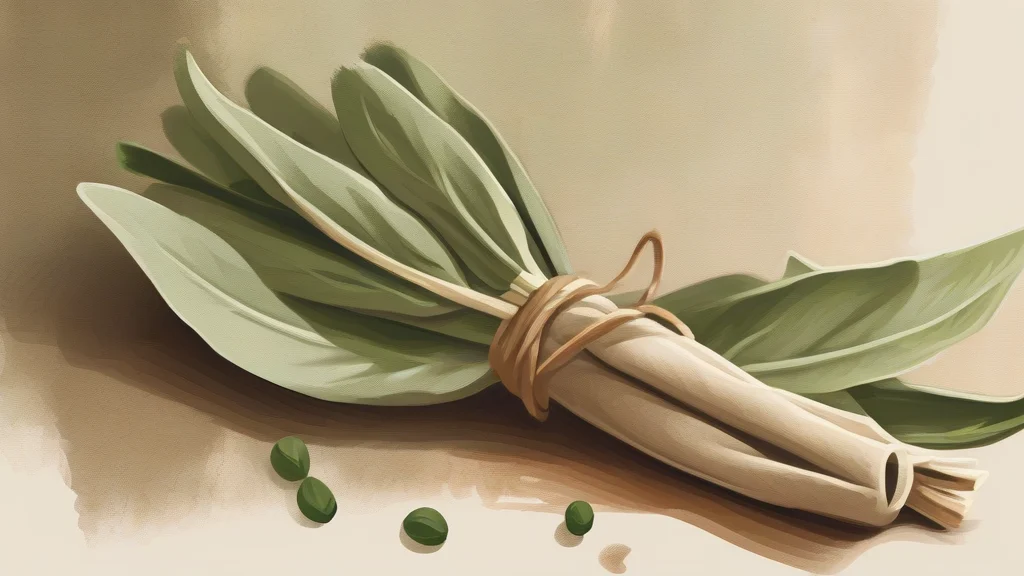
Sage has several related uses that can make its meaning depend on context. As a noun, it most commonly denotes an aromatic herb with soft gray-green leaves, valued in cooking for its distinctive flavor and traditionally used in remedies for various ailments. The same word is also the color name for a muted gray-green. As an adjective, sage means wise, experienced, and judicious, particularly in expressions such as “sage advice.” In its less frequent noun sense, a sage is a learned and respected person, often an elder whose judgment is sought by others. Although the herb and the words connected with wisdom have separate historical origins, modern English allows them to appear together in playful contexts. Sage is therefore especially useful as a vocabulary word because it links the practical world of food and color with the figurative language of experience, judgment, and mentorship.
An aromatic herb used in cooking and traditional remedies; more formally, a wise and respected person.
"The recipe called for thyme, rosemary, and a little sage."
“Sage” referring to the herb is usually an uncountable mass noun, although “sages” can denote individual plants. The sense meaning a wise person is literary and less common than the herb sense.
Wise, experienced, and showing sound judgment.
"After years in public service, he offered the council sage advice."
Often used before words such as “advice,” “counsel,” or “guidance.”
Used for multiple wise or learned people and, less commonly, for individual sage plants; the seasoning itself is normally uncountable.
"The village sages debated the changing seasons and the fate of their crops."
One word can be a fragrant kitchen herb, a shade of green, and a venerable source of wisdom.
Reviewed by Deb Chak, Editor. AI-assisted content curated by RJS Tech Solutions LLP.
Where does sage come from?
The culinary herb entered English through French sage, ultimately from Latin salvia, the name of the plant. The adjective and the noun meaning a wise person derive instead from Latin sapius, meaning wise, which is related to sapere, “to taste” or “to have senses,” and came to signify discernment and understanding. That root also underlies sagacious, sapient, sapience, and savvy.
Related word forms
How sage is actually used
The adjective is common in both formal and informal English. The noun meaning a wise person is more literary and often implies age, experience, or respected authority. The herb is normally treated as an uncountable mass noun when referring to the seasoning.
Easily confused with sage
Sage is an herb or an adjective meaning wise, whereas sedge is a grass-like plant often found in damp ground.