
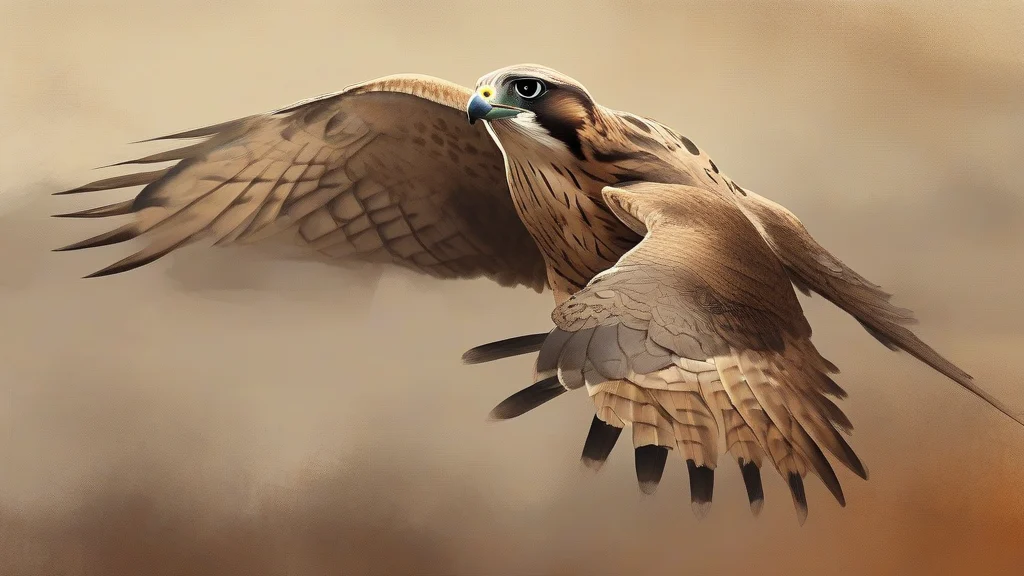
What does saker mean?
A saker is a large falcon of Europe and Asia, now commonly called the saker falcon and scientifically known as Falco sacer. It was once kept by trained falconers and used to hunt wild birds and game. Its robust build, powerful flight, and keen eyesight made it especially valued in the medieval and early modern practice of falconry. Today, the word is encountered mainly in the compound “saker falcon,” in wildlife literature, or in the scientific name of the species. The bird-name entered English from French and ultimately derives from an Arabic term associated with falcons. Saker also has an independent historical meaning: a large cannon. That sense now survives chiefly in older texts and historical writing, where it can surprise readers because modern usage normally associates the word with the falcon rather than artillery. Both meanings illustrate how the vocabulary of hunting, warfare, and the natural world has been preserved in modern English.
nounA saker is a large Old World falcon, now generally known as the saker falcon (Falco sacer), formerly kept for hunting in falconry. The word also formerly denoted a large cannon.
- A large falcon of Europe and Asia, especially the saker falcon (Falco sacer), formerly used in falconry.
- A large cannon; now chiefly historical.
"The falconer released a trained saker to pursue the heron across the marsh."
"The saker circled above the moor while the falconer watched from the ridge."
"The museum's collection includes an illustration of a saker used in medieval falconry."
Rare in modern general usage; plural forms commonly occur in historical, ornithological, or falconry contexts.
"The collection contains detailed drawings of two sakers from the royal aviary."
A saker was among the falcons prized by medieval falconers for its strength, speed, and imposing appearance.
Reviewed by Deb Chak, Editor. AI-assisted content curated by RJS Tech Solutions LLP.
Where does saker come from?
The English bird-name entered Middle English from French saker, ultimately from an Arabic term for a falcon. The name was applied to the powerful falcon now known as the saker falcon, which was valued in falconry. The separate sense of the word for a large cannon belongs to older military usage.
How saker is actually used
In modern English, the bird sense is usually encountered as part of “saker falcon” or in a taxonomic or falconry context. The standalone bird-name is dated but still understood. The cannon sense is archaic.