
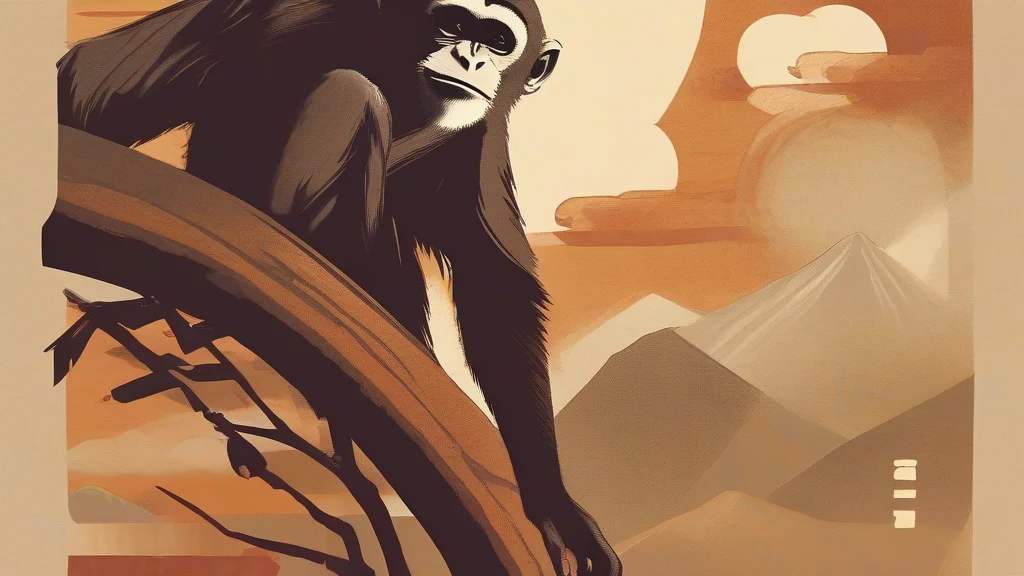
What does saki mean?
The saki is a small monkey native to tropical South America. The name refers to members of the genus Pithecia, a distinctive group of short-tailed primates that includes the black saki and white saki. Their coloration, facial appearance, and behavior vary among species, but they are generally recognized by their compact bodies, relatively short tails, and dense coats. The word is chiefly used in zoology, wildlife descriptions, and specialist field guides, where it may identify a particular species or refer to the broader genus. In modern English, saki is a technical noun with no strong positive or negative connotations, although its unfamiliar sound and spelling can lead speakers to confuse it with sake, the Japanese rice wine. Familiar forms include “black saki” and “white saki,” while the general compound “saki monkey” is also established. Saki is a useful word for readers interested in tropical wildlife because it names a group often overlooked in general accounts of South American primates.
nounAny monkey of the genus Pithecia, a group of short-tailed primates native to the forests of tropical South America. The group includes the black saki and white saki.
- A monkey belonging to the genus Pithecia, including species commonly called black and white sakis.
"A black saki watched quietly from the forest canopy."
"A black saki moved through the upper branches of a forest tree."
"Field guides use the name saki for members of the genus Pithecia."
The plural is used in zoological and wildlife contexts but is uncommon in general prose.
"A sanctuary veterinarian cared for three sakis after they were rescued."
One word, two faces: the black saki is mostly dark, while the white saki has a strikingly pale face.
Reviewed by Deb Chak, Editor. AI-assisted content curated by RJS Tech Solutions LLP.
Where does saki come from?
English borrowed the word in the 19th century from French saki. French had in turn taken the term from Tupian, an Indigenous language of the Amazon region, where it was used as a name for a monkey. The word subsequently became established in European zoological writing for members of the South American genus Pithecia.
How saki is actually used
This is primarily a specialized zoological term rather than an everyday word. In scientific writing, the capitalized genus name Pithecia is normally used for the broader group.
Easily confused with saki
A saki is a South American monkey, whereas sake is a Japanese alcoholic beverage made from fermented rice.