
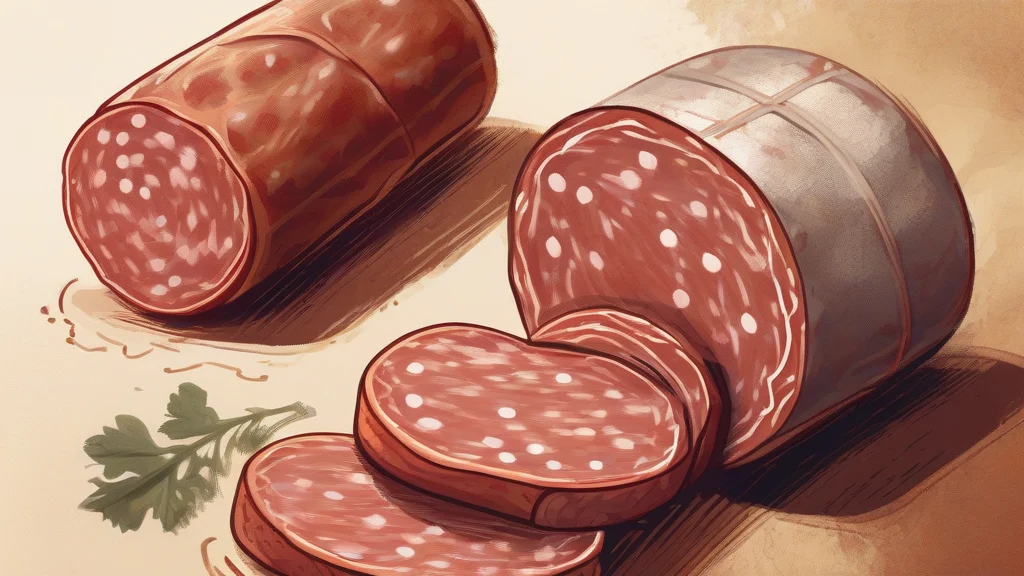
What does salami mean?
Salami is a cured, seasoned sausage that is usually made from pork and flavored with ingredients such as garlic, pepper, wine, or other spices. Its firm texture and strong, savory taste make it especially suitable for slicing, sandwich filling, pizza toppings, and antipasto platters. The word is commonly used as an uncountable noun for the food in general, as in “I bought some salami,” although speakers also use countable forms such as “a salami” and “salamis” when referring to individual sausages or different varieties. Although salami originated in Italy and is closely associated with Italian and Mediterranean food, it is now common in British and American supermarkets and delis. The term can also refer to the food more generally, particularly when comparing its salty, cured flavor with fresh or unsmoked sausage.
nounA cured, seasoned sausage, usually made from pork and sometimes flavored with garlic, spices, or wine. It is commonly eaten sliced or in sandwiches.
- A cured, seasoned sausage, usually made from pork and flavored with garlic or spices.
- Salami as a food, regarded collectively or as an uncountable mass noun.
"She served thin slices of salami with bread, cheese, and olives."
"The deli sells several kinds of salami, including one with cracked pepper."
"He added salami and provolone to the pizza before baking it."
Use “salamis” when counting individual sausages, but “salami” is common as a mass noun or when referring to the food generally.
"The shop stocks several salamis, while the deli counter also sells salami by the slice."
The word salami preserves an Italian past in its name: it comes from the same Italian verb associated with salting and seasoning food.
Reviewed by Deb Chak, Editor. AI-assisted content curated by RJS Tech Solutions LLP.
Where does salami come from?
The English word salami was borrowed from Italian salami, which is the plural of salame, “salami” or “a type of sausage.” Italian salame ultimately derives from salare, “to salt,” related to Latin sal, “salt.” The same Latin root underlies English words such as salary, saline, salt, and salty, though salami entered English as a loanword rather than through direct Old English inheritance.
How salami is actually used
In general use, salami is usually treated as an uncountable noun when referring to the food collectively, but count forms such as “a salami” and “two salamis” are also common, especially when discussing individual sausages or varieties.
Easily confused with salami
Salami is a specific type of cured, seasoned sausage, while sausage is the broader category that includes many fresh, smoked, and uncooked varieties.