
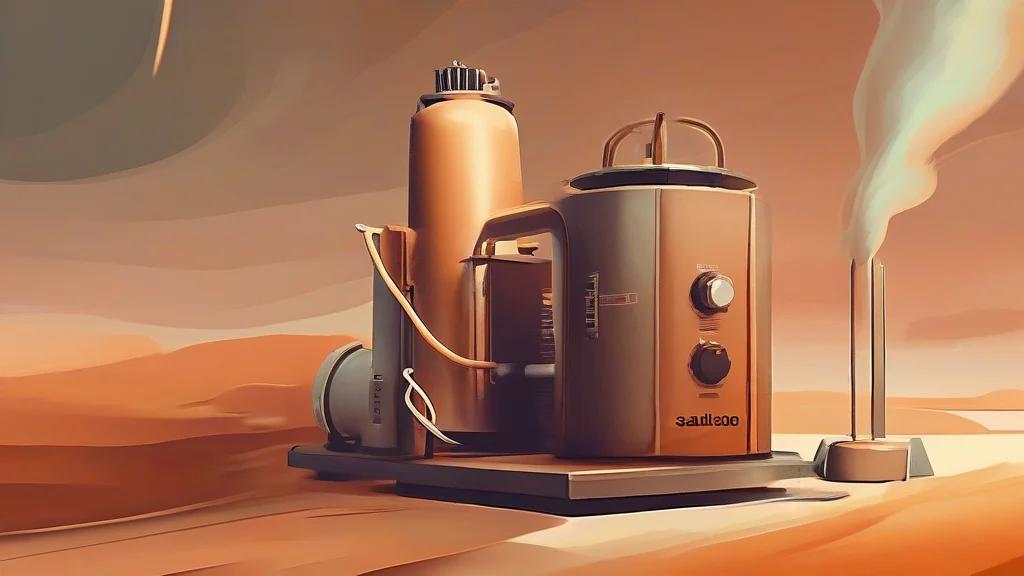
What does saturator mean?
A saturator is a device that brings a substance or medium to the point of saturation, meaning it is filled to its maximum capacity with another material. For example, an oxygen saturator adds oxygen to water until the desired dissolved-oxygen level is reached. The term is especially common in technical and industrial settings, including aquaculture, chemical processing, and environmental equipment. It is not usually used for a person who fills something to capacity, and it is distinct from the related terms “saturate” and “saturation,” which describe the process and the resulting condition rather than the apparatus itself. The word is useful when precision matters because it specifically names equipment designed to achieve a saturated state.
nounA device or apparatus that saturates a substance or environment, especially by bringing it into contact with a liquid, gas, or other medium until it is fully saturated.
- A device that saturates a substance or medium, especially by introducing or dissolving a material until its capacity is reached.
"The oxygen saturator supplies oxygen-rich water to the aquaculture system."
"The oxygen saturator helps maintain the desired oxygen level in the water."
"A brine saturator can prepare concentrated salt solution for industrial use."
The plural is used when referring to multiple saturating devices.
"The plant installed new saturators for its processing lines."
From “saturated,” meaning completely filled, a saturator is the device that gets something to that limit.
Reviewed by Deb Chak, Editor. AI-assisted content curated by RJS Tech Solutions LLP.
Where does saturator come from?
“Saturator” was formed in English by adding the suffix “-or,” indicating an instrument or device, to “saturate.” “Saturate” comes through Latin “saturare,” meaning “to fill fully” or “make sated,” ultimately related to Latin “satus,” meaning “filled” or “sated.” The same Latin root also underlies “saturation” and “saturated.”
How saturator is actually used
The word is most often used in technical, industrial, environmental, and aquaculture contexts. Outside these fields, it is uncommon and may sound mechanical or specialized.