
What does sauntering mean?
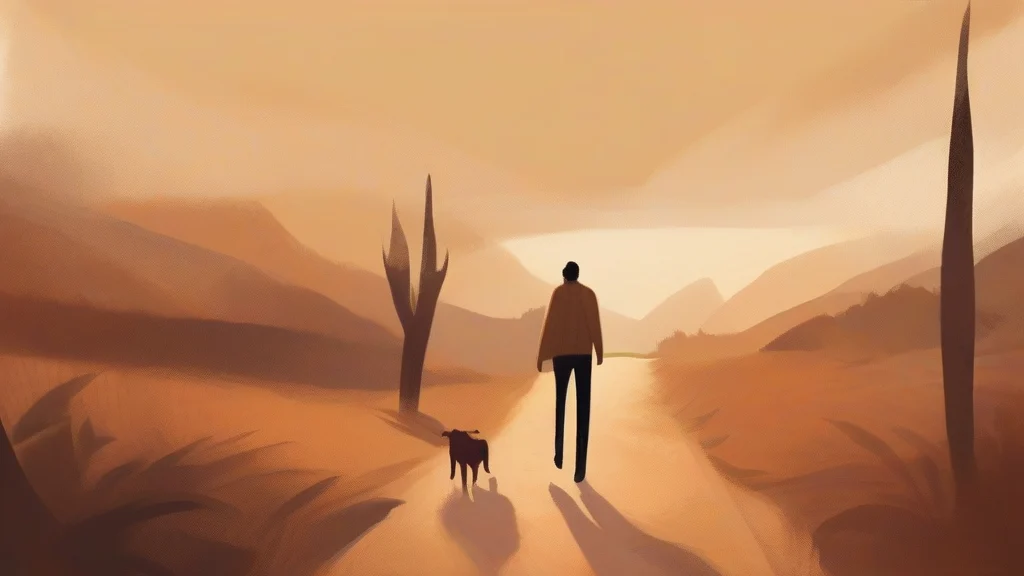
Sauntering describes walking or moving at an easy, leisurely pace, without hurry or urgency. It often conveys a sense of relaxed enjoyment, casual wandering, or deliberate dawdling. People can saunter through a park, along a street, or across a room, while animals or vehicles may also move in a sauntering manner. The word is somewhat literary and old-fashioned, so it is more evocative than a neutral description such as “walking.” It can carry a mildly ironic implication when someone appears to be taking an unnecessarily long time, but its usual sense is one of comfortable, unhurried movement. Sauntering belongs to the family of words associated with strolling, ambling, and wandering, all of which emphasize a slow or relaxed manner of travel.
Walking or moving in a leisurely, unhurried manner.
"The sauntering breeze carried the scent of jasmine through the courtyard."
Often literary or slightly old-fashioned in tone.
To walk or move in a leisurely, unhurried manner.
"They sauntered along the river until evening."
To saunter is to let the journey take its time, turning a walk into an unhurried pleasure.
Reviewed by Deb Chak, Editor. AI-assisted content curated by RJS Tech Solutions LLP.
Where does sauntering come from?
The word derives from the verb “saunter,” whose deeper historical origin is not entirely clear. In modern English it became associated with walking at a slow, casual, and leisurely pace. The present form “sauntering” follows the ordinary English pattern of adding “-ing” to the verb.
Related word forms
How sauntering is actually used
The word has a relaxed, often slightly literary or old-fashioned tone. It commonly describes a person walking casually or a move characterized by an easy, unhurried pace.
Easily confused with sauntering
Scurrying means moving with quick, hurried steps, whereas sauntering means moving leisurely and without urgency.