
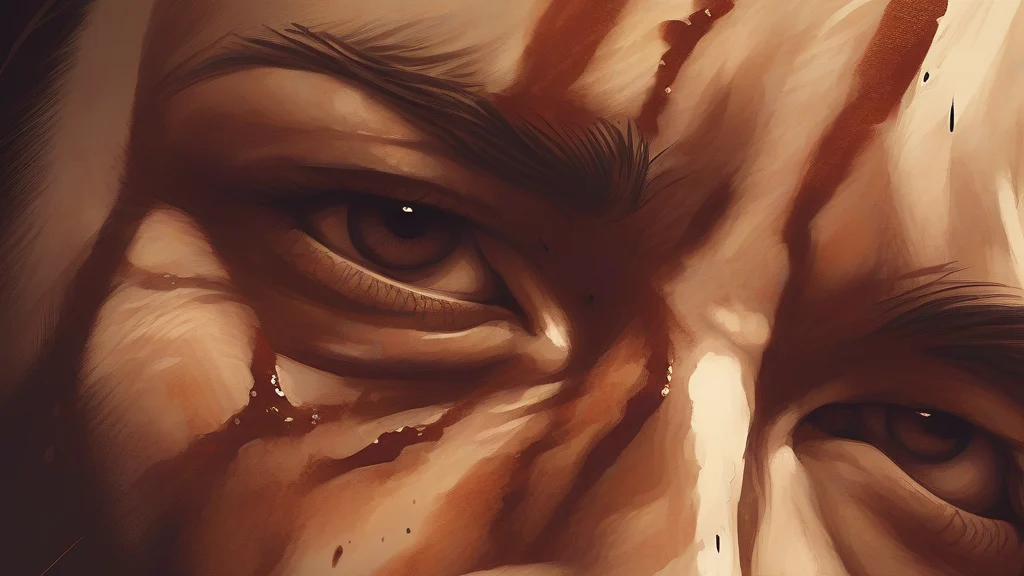
What does scarred mean?
“Scarred” describes a person, body, object, or experience that bears the lasting marks of damage. In its literal use, it means covered or marked by a scar, as in burned or badly scarred skin. It can also function as a verb: something scars a surface or person by leaving a permanent mark, while “scarring” names the process. Figuratively, the word applies to emotional or psychological wounds that continue to affect someone long after the original event, especially in expressions such as “scarred by war” or “emotionally scarred.” The word is serious rather than neutral because it implies damage that is difficult to undo. It is not limited to physical injury, but figurative uses should represent genuine and consequential harm rather than every ordinary disappointment. Overall, “scarred” usefully describes both visible bodily marks and less visible, persistent traces of trauma.
Bearing one or more scars or permanent marks caused by injury, damage, or a deeply distressing experience.
"He was scarred by the accident and spent months undergoing treatment."
The figurative adjective usually implies enduring emotional or psychological harm.
To leave someone or something marked by a scar; figuratively, to cause lasting emotional or psychological harm.
"The blast scarred the façade of the old church."
This is the past tense and past participle of the verb scar.
A scar is a wound's permanent signature, but the word “scarred” can also describe trauma that leaves no visible mark.
Reviewed by Deb Chak, Editor. AI-assisted content curated by RJS Tech Solutions LLP.
Related word forms
How scarred is actually used
Scarred is common in both literal and figurative English in British and American usage. Its figurative use normally implies serious, lasting harm, making it more forceful and dramatic than “marked” or “affected” in many contexts.
Easily confused with scarred
Scarred means marked by lasting damage, whereas scared means frightened.