
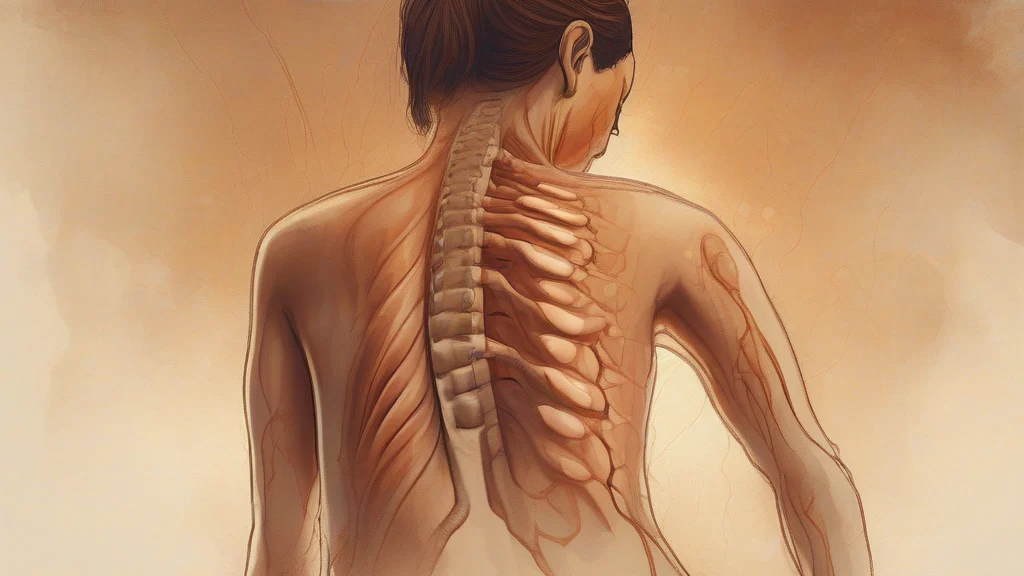
What does sciatica mean?
Sciatica is the name for a characteristic set of symptoms caused by irritation or compression of the sciatic nerve, the body's largest nerve. The condition commonly produces pain, tingling, numbness, or weakness that begins in the lower back or buttock and travels down one leg, sometimes reaching the foot. Although people often describe the condition simply as severe back pain, true sciatica is nerve-related and may result from problems such as a herniated disc or another form of nerve compression. It is also a symptom rather than a disease in itself, so the underlying cause can vary. In conversation, “sciatica” is widely used for these leg symptoms, while medical professionals may use more specific terms such as radicular pain or sciatic neuritis. The word is familiar in both British and American English.
nounSciatica is pain, numbness, or tingling caused by irritation or compression of the sciatic nerve, typically affecting the lower back or buttock and extending down one leg. It is a symptom rather than a single disease.
- Pain, numbness, or tingling resulting from irritation or compression of the sciatic nerve, usually felt from the lower back or buttock down one leg.
"After weeks of severe leg pain, she was diagnosed with sciatica caused by a compressed nerve in her lower back."
"He had been treating his sciatica with stretching and over-the-counter pain relief."
"An MRI revealed a herniated disc that was causing her sciatica."
Sciatica is normally used as an uncountable noun and has no regular plural form.
"Her sciatica improved after several weeks of treatment."
Sciatica is not a back-pain diagnosis so much as a nerve-related symptom: the source may be in the lower back, but the unmistakable sensation travels down the leg.
Reviewed by Deb Chak, Editor. AI-assisted content curated by RJS Tech Solutions LLP.
Where does sciatica come from?
The word comes through Late Latin from Latin sciaticus, meaning “of or relating to the hip.” That adjective was borrowed from Greek ischion, associated with the hip or socket of the hip bone. The modern English form developed as a medical term for pain affecting the sciatic nerve.
Related word forms
How sciatica is actually used
The term is used in both formal medical writing and everyday speech. In clinical contexts, it generally refers to a symptom associated with nerve-root compression, although the precise cause must be determined medically.
Easily confused with sciatica
Lumbago is a general term for pain in the lower back, whereas sciatica specifically involves symptoms caused by irritation or compression of the sciatic nerve.