
What does sconced mean?
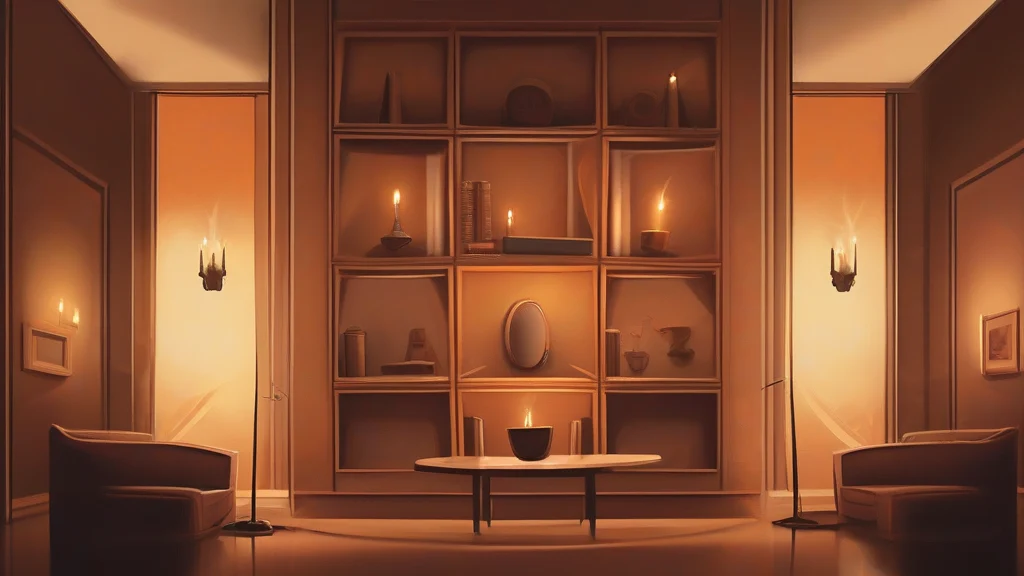
Sconced describes a place that is illuminated by a sconce, especially a wall fitted with a candle holder, bracket light, or similar wall-mounted fixture. It appears chiefly in literary descriptions of historic interiors, where it evokes a restrained or traditional form of illumination: “a sconced corridor” or “sconced walls.” The word can also function as the past participle of the verb sconce, meaning concealed or hidden, though that use is more archaic than the modern, established adjective sense. Although relatively uncommon in everyday speech, sconced remains useful in formal and descriptive writing because it identifies a particular kind of lighting rather than light in general. It can also carry a historical atmosphere, suggesting an older room illuminated by candles or ornamental wall fixtures rather than modern ceiling lighting.
adjectiveLit by a sconce. In older usage, it can also mean concealed or hidden, as the past participle of the verb sconce.
- Lit or illuminated by a sconce.
- Concealed or hidden, as the past participle of the verb sconce.
"A pair of sconced walls cast a soft glow across the dining room."
"The sconced corridor led into a shadowy dining room."
"Her face remained sconced behind the heavy curtain."
A sconced wall is not a wall hiding a light—it is a wall illuminated by one.
Reviewed by Deb Chak, Editor. AI-assisted content curated by RJS Tech Solutions LLP.
Where does sconced come from?
Sconced was formed from the English word sconce, which was borrowed through Old French during the medieval period and had older senses connected with wall fittings, concealment, and projecting structures. The noun sconce eventually acquired its familiar sense of a wall-mounted light or candle holder. The adjective sconced developed from the verb sconce in the sense of lighting or providing light with such a fixture, while its participial sense relating to concealment survives from an older use of the verb.
Related word forms
How sconced is actually used
The adjective meaning “lit by a sconce” is literary and somewhat old-fashioned. The meaning “hidden” is chiefly encountered in older prose or in the verb's past-participle construction.