
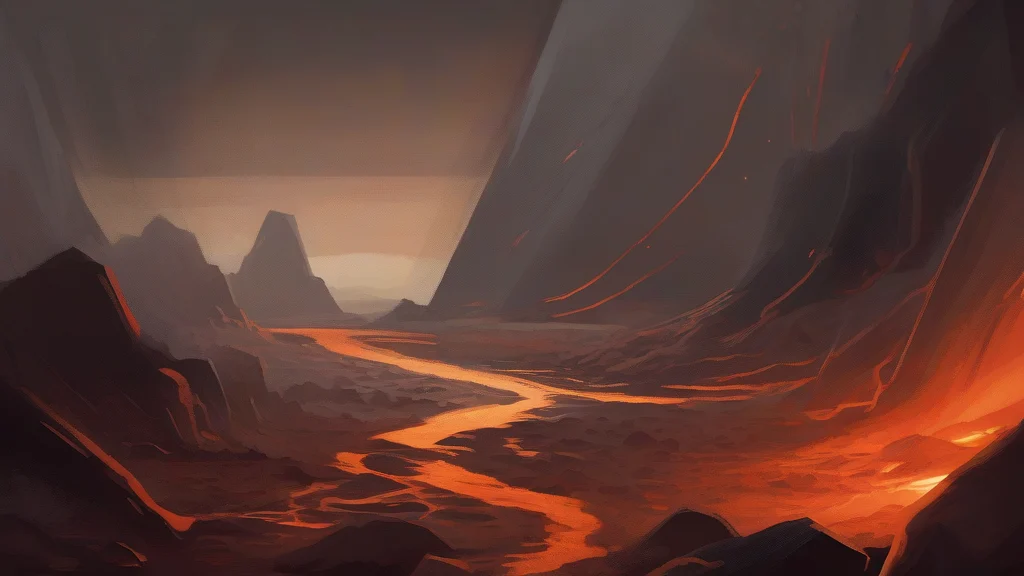
What does scoria mean?
Scoria is a highly porous volcanic rock produced when gas-rich lava cools and solidifies rapidly. The escaping gas leaves numerous small cavities, or vesicles, throughout the rock, giving it a light, cellular appearance. Scoria is often black, dark brown, or reddish, and its weathered fragments can form distinctive red or black volcanic landscapes and beaches. The word is especially common in geology, volcanology, and descriptions of volcanic terrain, although 'volcanic cinder' is often more understandable to general audiences. It should not be confused with industrial slag, which is a manufactured residue from smelting or metalworking. Scoria is also a useful term when precision matters because it identifies a particular type of vesicular volcanic material rather than simply describing any loose volcanic fragment.
nounA dark, porous volcanic rock formed when gas-rich lava cools rapidly, often containing abundant vesicles. It is commonly reddish-brown or black and is also called volcanic cinder.
- A highly vesicular, usually dark or reddish volcanic rock formed from lava.
"The cliff is made of scoria, the porous volcanic rock that gives the island its dramatic red cliffs."
"Scoria fields cover large areas of the volcanic landscape."
"The island's black scoria beaches are formed from cooled volcanic fragments."
The usual plural is 'scorias'; 'scoriae' also appears in older or more specialized usage.
"Several scorias were collected from the volcanic deposits."
Scoria comes from the Greek word for rubbish or dross, an apt name for a rock created by the chaotic bubbling and cooling of volcanic lava.
Reviewed by Deb Chak, Editor. AI-assisted content curated by RJS Tech Solutions LLP.
Where does scoria come from?
The word comes from Greek σκορία (skoría), meaning dross, refuse, or slag, through Latin. The Greek term is associated with skoros, 'rubbish' or 'dross,' reflecting the material's waste-like character during the processing of ores or its origin as a fragmental volcanic product. Its use in English became established in geological terminology for porous volcanic rock.
Related word forms
How scoria is actually used
This is primarily a geological term. In general English, 'cinder' is often more accessible, while 'scoria' specifically emphasizes the rock's porous, vesicular texture.
Easily confused with scoria
Scoria is a natural volcanic rock formed from lava, whereas slag is the solid residue left by the melting or processing of metals and minerals.