
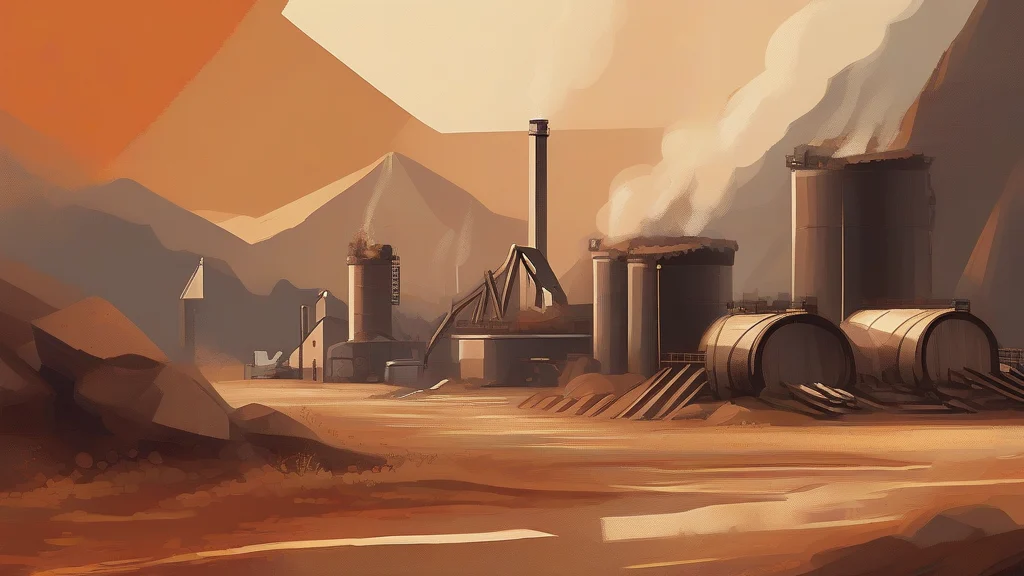
What does scorifying mean?
Scorifying describes a metallurgical process in which ore or another mineral is heated with a suitable flux so that much of the material becomes slag. This molten or fused residue can then be separated from a metallic bead or product, making scorification especially useful in mineral analysis and the treatment of difficult ores. The term is also encountered in older technical descriptions of refining and assaying. In contemporary use it is principally a specialist process or furnace term rather than a general synonym for heating or melting. Its unusual name captures the process's purpose: the ore is converted into a slag-like mass so that its metal can be more readily recovered or examined.
Relating to the conversion of ore or mineral into slag by heating it with a flux.
"The scorifying chamber formed part of the small-scale refining plant."
Chiefly used in technical metallurgy and mineral analysis.
Present participle of scorify: converting ore or mineral into slag by heating it with a flux.
"The operator was scorifying the concentrate in a refractory-lined vessel."
Used as the present participle of the verb scorify.
Scorifying makes stubborn ore surrender: intense heat turns it into slag that can be separated from the metal.
Reviewed by Deb Chak, Editor. AI-assisted content curated by RJS Tech Solutions LLP.
Where does scorifying come from?
Scorifying is the present participle of scorify, an English verb formed by combining score, in its older metallurgical sense of reducing material to slag, with the suffix -ify. The related noun scorification names the process itself, while a scorifier is a vessel used to carry it out.
Related word forms
How scorifying is actually used
This is specialist terminology used in metallurgy, mineral processing, and mineral analysis. It is normally used attributively or as the present participle of the verb scorify, rather than as an everyday descriptive word.