
What does scree mean?
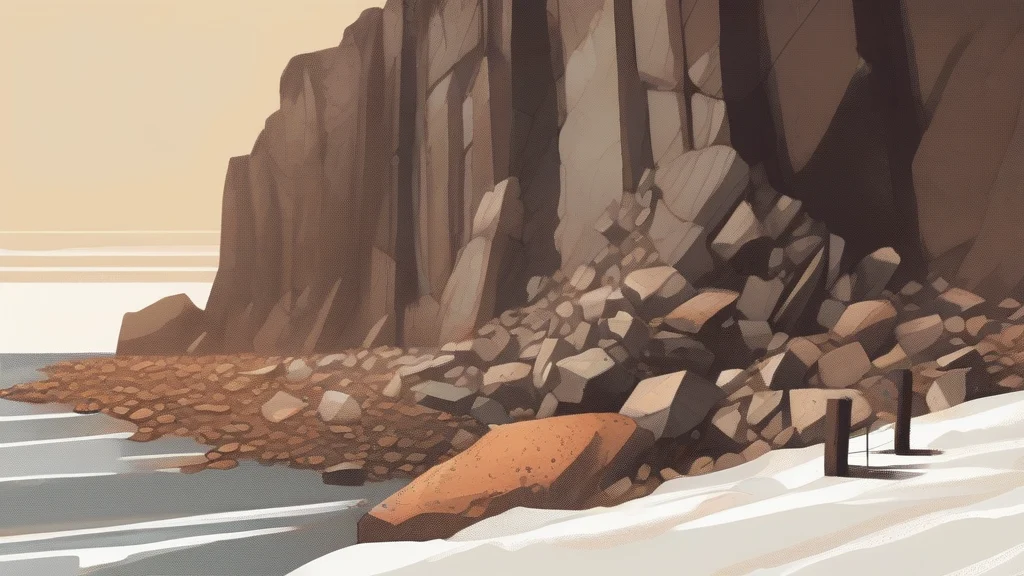
Scree names the loose fragments of rock that accumulate on mountainsides and at the foot of cliffs. These pieces are generally angular because they result from the weathering and breakage of exposed rock rather than being worn smooth by flowing water. A hillside may be covered in a deep layer of scree, making it unstable and difficult to walk across safely. The word can also be used as a chiefly British informal verb: to scree something means to shatter or break it into pieces. As a noun, scree is often treated as a mass term, although “screes” is also used for separate masses or areas of loose stone. The term is useful in geography, mountaineering, and descriptions of rugged landscapes because it identifies a distinctive form of rocky debris rather than simply loose soil or gravel.
A loose accumulation of broken, angular rock fragments, especially on a mountain slope or at the base of a cliff.
"The path disappeared beneath a layer of loose scree."
Common in geological, geographical, and mountaineering contexts; often treated as a mass noun.
To break or shatter into pieces.
"The impact screed the pottery across the floor."
Chiefly British and informal.
Also commonly used as a mass noun with no plural marking, especially when referring to the material collectively.
"The climbers carefully picked their way across the screes below the ridge."
Scree is the loose geological debris of mountains, the natural result of cliffs slowly breaking apart and scattering their fragments downhill.
Reviewed by Deb Chak, Editor. AI-assisted content curated by RJS Tech Solutions LLP.
Where does scree come from?
The noun entered English in the early 17th century from Old Norse skri, meaning “stoneslide” or “landslide.” That form is related to Old Norse skrida, “to slip” or “to glide,” and has counterparts in other Scandinavian languages. The word originally referred to loose stones descending or lying on a slope before developing its broader geological sense for accumulated rock debris.
Related word forms
How scree is actually used
In its geological sense, the word is used in British and US English and is especially associated with mountainous regions. The verb is chiefly British and informal, conveying a more violent or complete shattering than ordinary words such as “break” or “smash.”
Easily confused with scree
Scree consists mainly of angular rock fragments, whereas shingle usually refers to rounded stones worn smooth by water.
Gravel is a broad term for small loose stones, while scree specifically emphasizes angular fragments accumulated from rocky slopes or cliffs.